

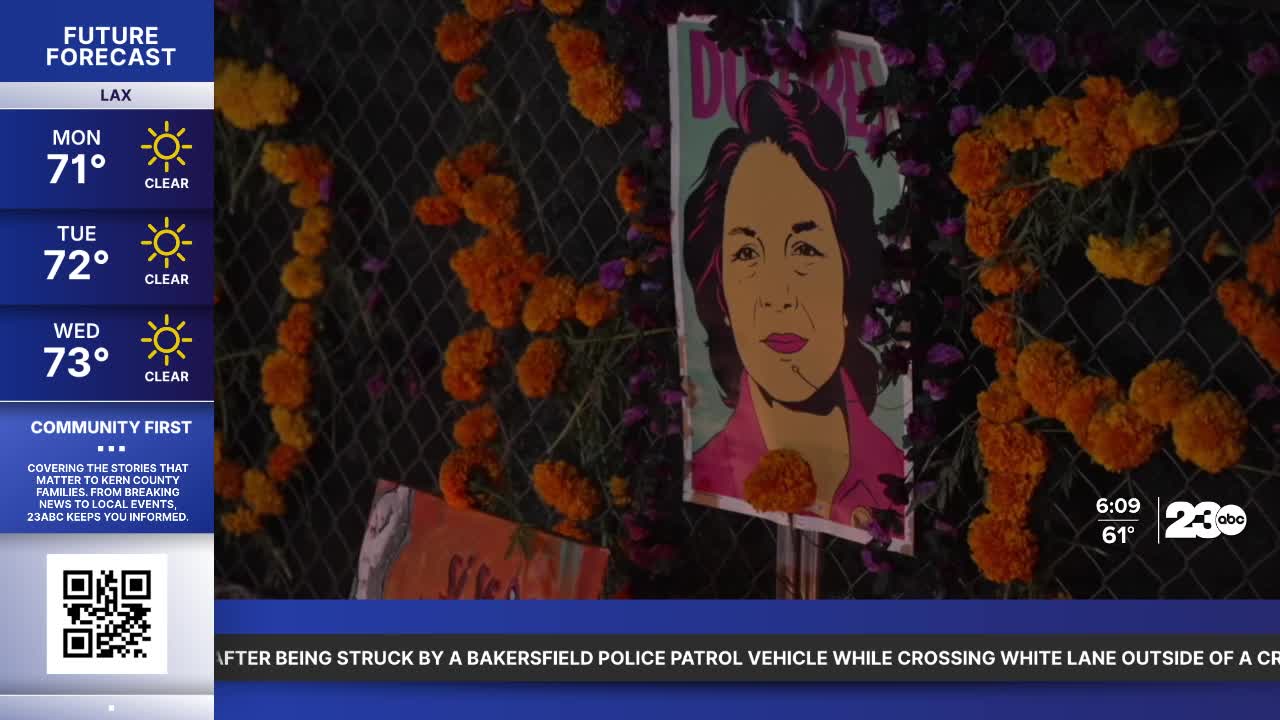


BAKERSFIELD, Calif. (KERO) — People across the world are paying tribute American labor leader and feminist activist Dolores Huerta.
Huerta died in October at the age of 96.
A public Rosary and evening vigil will be held Thursday evening in Bakersfield, California. An interfaith memorial service is being held on Friday with a dozen speakers including political leaders, Latino activists and Labor leaders.
As many honor her legacy, a new generation is learning about the battles she fought and her impact on the world.
Who was Dolores Huerta?
Dolores Clara Fernandez was born on April 10, 1930 in a small mining town northern New Mexico.
Her father Juan Fernández, a farm worker and miner by trade, was a union activist who ran for political office and won a seat in the New Mexico legislature in 1938.
Dolores spent most of her childhood and early adult life in Stockton, Calif., where she and her two brothers moved with their mother.
She later said her mother’s independence and entrepreneurial spirit influenced her to become a feminist.
As an adult she became a teacher and said seeing her students come to school with empty stomachs and bare feet led to her work to correct economic injustice.
Life as an Organizer:
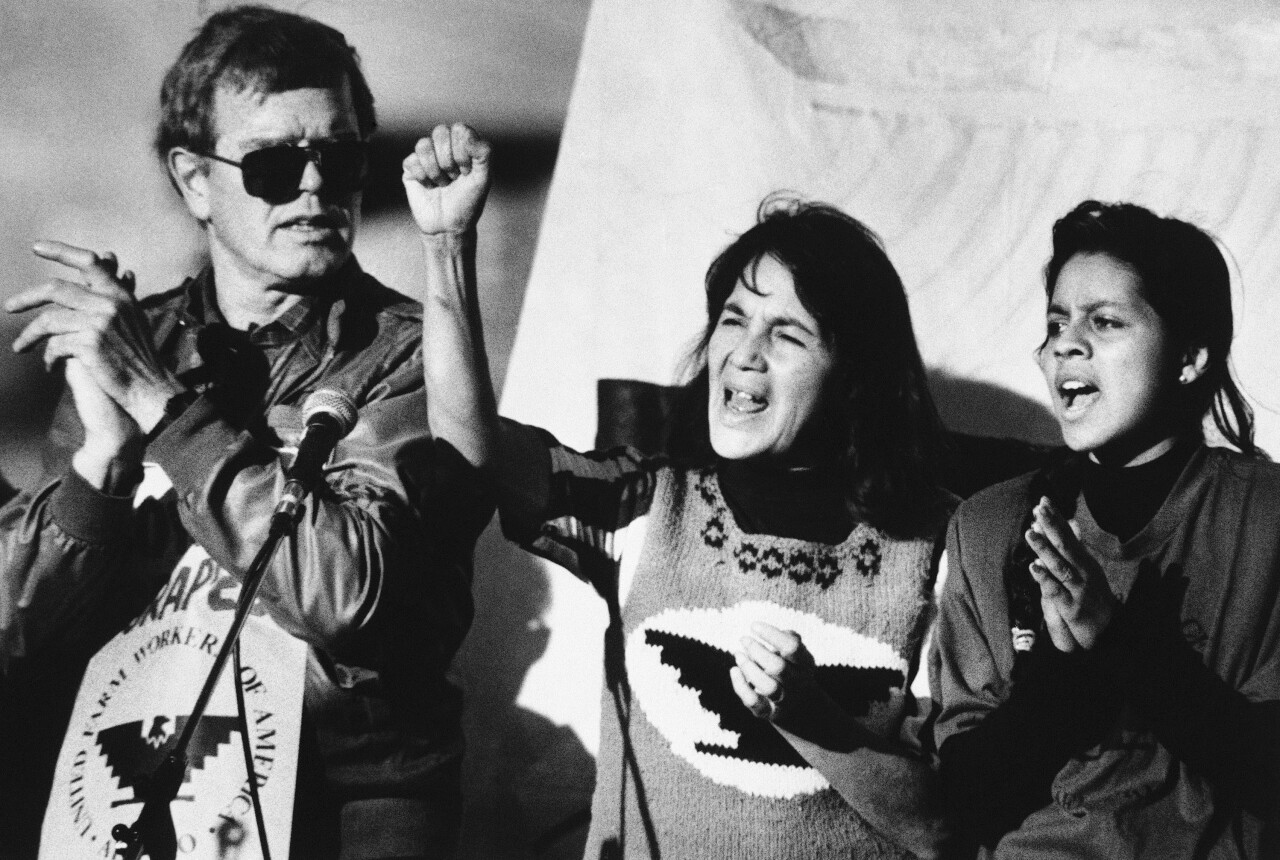
She found her calling as an organizer while serving in the leadership of the Stockton Community Service Organization. During this time, she founded the Agricultural Workers Association, set up voter registration drives, and pressed local governments for barrio improvements.
She worked with Cesar Chavez to launch the National Farm Workers Association in 1962.
The first testament to her lobbying and negotiating talents is seen in securing Aid for Dependent Families and disability insurance for farm workers in the State of California in 1963, an unparalleled feat at the time. She was also instrumental in the enactment of the Agricultural Labor Relations Act of 1975.
In the 1970s, she met Gloria Steinem and started consciously challenging gender discrimination within the farm workers’ movement.
Throughout her life she worked to develop leaders and advocate for the working poor, women, and children. She traveled across the country engaging in campaigns and influencing legislation supporting equality and defends civil rights.
"Sí, se puede" (Spanish for "Yes, you can") is the motto of the United Farm Workers of America, and other activist groups. Huerta created the phrase in 1972 during César Chávez's 25-day fast in Phoenix, Arizona.
She was arrested 22 times, roughed up by strikebreakers and once severely beaten by a police officer, suffering broken ribs and a ruptured spleen that left her disabled for months.
President Barack Obama awarded her the Presidential Medal of Freedom, America’s highest civilian honor, in 2012.
Legacy of activism:
In a 2020 New York Times interview she talked about her movement transcending borders, “I think it’s because of the people who are involved. And this is the reason I, at the age of 90, continue to work. When people come together and take collective action, whether it’s in a march, whether it’s in a union election or, most important, come together to vote, this is how we make change.”
In March 2026, Huerta publicly disclosed she survived sexual abuse in the 1960s by Cesar Chavez.
Huerta explained she remained silent for decades because she believed speaking out would harm the farm worker movement she devoted her life to building.
“I am nearly 96 years old,” she wrote, “and for the last 60 years have kept a secret because I believed that exposing the truth would hurt the farm worker movement I have spent my entire life fighting for.”
By coming forward Huerta insisted gender justice must stand alongside labor justice and that movements cannot be reduced to a single figure.
Huerta died from cancer in October 2026 at her home in Bakersfield, California.
Her survivors include 13 of her children, 24 grandchildren, 23 great-grandchildren and seven great-great-grandchildren.
