

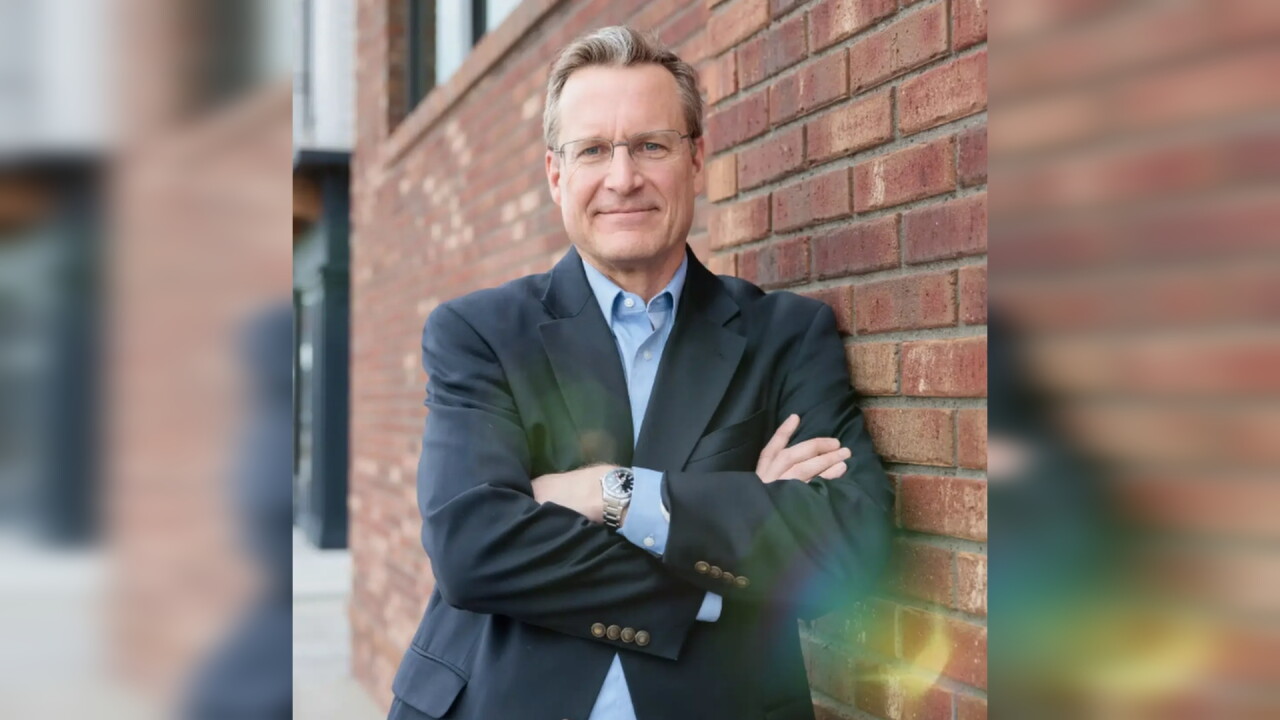


BILLINGS, Mont. — Republican U.S. Senate candidate Kurt Alme is leaning on a lifetime of Montana ties as he campaigns on issues ranging from housing and the economy to immigration, abortion, public lands and the conflict in the Middle East.
Alme, 59, was born in Great Falls to parents who were both schoolteachers. His family moved around the state, living in Dillon, Victor, Helena and Miles City, where he graduated from high school.
“My parents instilled in me some good common-sense values of faith and hard work and taking care of your neighbor,” Alme said.
Those Montana roots remain central to his campaign. Alme said he and his wife, Sandra, returned to Montana after school to raise their children and settled in Billings, where they became involved in schools, churches and community organizations. Their family has also spent much of its time outdoors, including camping, skiing, hiking and fishing.
“Our kids were involved in all kinds of school activities and community and church activities,” Alme said.
Alme's career has included private law practice and several public-service roles. He served as director of the Montana Department of Revenue under Gov. Judy Martz and later as Gov. Greg Gianforte's budget director. He also served as U.S. attorney during Montana's methamphetamine epidemic.
He said his experience in state government taught him how to cut taxes, balance budgets, and reduce spending, while his time as a prosecutor shaped his approach to public safety and combating drug trafficking.
As a Senate candidate, Alme says affordability is one of the biggest concerns he hears from Montana families.
“When Sandra and I moved back here after school, we bought a small house, and we were able to start a family. Our kids are now in their 20s, and they can't afford to do it, because they can't make the house payments. And that's not right.”
Alme says reducing federal spending, cutting regulations, and increasing housing supply would help lower costs. He also argues that keeping taxes low would allow working families to keep more of their income.
“Everything is too expensive and we need to work on bringing those costs down and making life more affordable,” he said.
On immigration, Alme supports aggressive enforcement and says the federal government should prioritize deporting people who are in the country illegally and have committed crimes. He also supports continuing efforts to secure the southern border.
On trade, Alme said he supports free trade but also wants what he calls fair trade. He said Montana farmers, ranchers and businesses have been hurt by trade disputes and that negotiations should continue with Canada and other trading partners.
“I want a deal and I want it soon,” Alme said.
Alme also said Montana's agricultural economy needs support as ranchers recover from drought and shrinking cattle herds. He said federal policy should help producers rebuild their herds and expand markets for Montana beef and other agricultural products.
On federal spending, Alme said the national debt is unsustainable and called for reductions in waste, fraud and government spending.
“We have got to get that debt down,” he said.
Alme said his approach to abortion would emphasize protecting life while supporting pregnant women and limiting late-term abortions, with exceptions for rape, incest and the life of the mother.
He also supports greater management of federal lands, including thinning forests, prescribed burns and responsible logging to reduce wildfire risks. He said local communities should have a voice in forest-management decisions.
On the Middle East, Alme said the United States should respond to threats from Iran while avoiding another prolonged ground war.
“Our foreign policy should always take an America first approach,” he said.
“But let me be clear, I will never support sending our sons and daughters boots on the ground into another forever war.”
Alme said his campaign is ultimately rooted in the same communities where he has spent his life.
He said encounters with old friends around Montana are a reminder of the relationships he has built over decades — and of the state's communities he says he wants to represent in Washington.
____________________________________________________________________________________________
The following interview has been edited for brevity and clarity.
Q: Tell me a little bit about you, your age, your background, living in Montana.
Kurt: “Yeah, so I'm 59 years old, and I'm a native Montanan. I was born in Great Falls and my parents were both schoolteachers there. Dad taught high school math, and mom was an elementary school teacher. And then we were blessed to get to grow up all over the state. So I lived in Dillon and Victor and Helena and graduated high school in Miles City."
"My parents instilled in me some good common-sense values of faith, hard work and taking care of your neighbor. And growing up, our family spent a lot of time being outdoors in Montana. So caught my first fish in Blacktail Deer Creek down in Dillon and learned to ski at Maverick Mountain, which unfortunately suffered a tragic wildfire this last summer.
“And then moved over to Victor, and we used to ride our bikes across 93 and spend the day fishing on the Bitterroot. And then being in Helena and Miles City, our family spent a lot of time camping, fishing, hiking, biking, boating, skiing all over the state."
“Growing up in Montana, I spent a lot of time doing sports in school and also doing things like student council and boy state. In fact, just a couple of months ago, I was back in Sidney at the Richland County Fair and ran into an old friend who reminded me that the Sidney Eagles had beaten the Custer County Cowboys for the state championship football game in 1984.
“So those things don't die quickly in Montana. And then also we were just in Missoula last week and I ran into a friend, old friend from Boy State. He reminded me he had been Secretary of State there when I was governor way back in 1984. But those are the kind of meetings we're still having now of connecting with people all over the state from growing up here.”
Q: Are you the only candidate that is from Montana?
Kurt: “I believe one other maybe too, but yeah, certainly our two liberal opponents are not from Montana. Yeah, you're a Montanan.”
Q: Talk to me about your family.
Kurt: “Yeah, so, you know, Sandra and I came back after school and we wanted to set down roots in a place where we could raise our kids. And so we wanted to come back to Montana. We were blessed to get to live in Billings and we have sunk down roots here. And we wanted to be in a place where we get to know people, have lifetime relationships and friendships, and then also a place where we could plug into the community and help make, step up and help make the community a better place. And we've certainly been blessed with that here.”
“You know, our kids were involved in all kinds of school activities and community and church activities. And we're still friends with a lot of their parents.”
“And then our family has also spent a lot of time out of doors. We're campers, skiers and hikers. And then my son and I, in particular, are big backpackers and fishermen. We like to go all over the state, but we're a little partial to the Beartooths. In fact, my son was just out there a couple of days ago and brought home about five nice big cutthroats that we had for dinner last night.”
“That's awesome. Yeah, it's fantastic to get to live here like we do.”
Q: Tell me about your career and community involvement.
Kurt: “And then, you know, I've been involved in our community. I've been stepping up to help our state and our community, both through work and through community involvement my whole career.”
“You know, I was a partner here at the Crowley Fleck Law Firm, but I stepped up to serve as Judy Martz's director of Department of Revenue, back when we were trying to create good paying jobs, which was important to me because so many of my friends and family had had to leave the state in order to find work. So we went to work on that 11% income tax rate, and we got the largest rate reduction in state history and got our taxes competitive again so that we could attract businesses and jobs to the state.”
“Then I was working for Yellowstone Boys and Girls Ranch Foundation when the meth epidemic swept across the state. So I stepped up again as U.S. Attorney to go after our meth problem. And we were able to not only prosecute more violent criminals and drug traffickers this last year than any year in the last 20, we were also able to bend down the violent crime curve. That was so important too, because we also were not only going after supply, but working with the community and communities across the state to reduce demand by improving prevention and treatment.”
“And then I stepped up again to go work with Governor Gianforte as his budget director. We picked up right where Judy Martz had left off, and we were going to work on good paying jobs. We not only were able to balance the budget, but we were able to deliver one of the biggest set of tax cuts in state history. And we still left enough of a surplus to make the state debt free.”
Q: What community involvement have you had?
Kurt: “So I've been very honored to have those opportunities and work. And then, of course, in our community here, we've been very involved, working with kids and seniors and the sick and the poor and the mentally ill.”
“I've been on everything from Yellowstone Boys and Girls Ranch Foundation Board, where I also worked to care for our Montana kids, to Yellowstone Boys and Girls Club Foundation, Friendship House, coached both baseball and softball, Boulder Arrowhead Little League, and was a Cub Scout den leader and coached basketball.”
“And then just right over here, I was on the board at St. John's, and then on the board at St. Vincent's, which, of course, now is Intermountain, and was one of the founding board members and early board members for Family Promise, which used to be Interfaith Hospitality Network.”
“Also spent a lot of time in mental health, not just at Yellowstone Boys and Girls Ranch Foundation, but also as a pro bono lawyer, working to represent the Yellowstone County Guardianship Council, which takes care of seniors who no longer can care for themselves, and they don't have any family or friends who'll step up and be their guardian. So I represented the council, and Montana Health Association recognized me as the honorary award winner for the year for mental health services.”
“So we're really plugged into this community. We've been very blessed to get to live here. Our kids have been blessed to get the chance to grow up here and have a good, stable life in a wonderful community.”
Q: Should the federal government be putting more restrictions on data centers? Should local communities have an absolute right to say no to construction in their area?
Kurt: “You know, as I've been traveling all over the state, I talk to people about data centers all the time. And let me be clear. I will always protect Montana.”
“If a data center company wants to come into any community in Montana, they first have to be transparent. They have to fully disclose their costs and their impacts on the community.”
“And then they need to meet certain guardrails. So first, they'll have to be sure that they bear their own cost, and they got to create local jobs. The next one is they have to protect our water. We can't have any adverse effects on water-- other water users or water quality. And finally, they've got to guarantee that there will be no increase in electricity costs to Montana families. In fact, they ought to be helping reduce electricity prices for Montana families.”
“And even if those guardrails are followed, they need to sit down and earn the support of the local community that they want to join.”
“So as senator, I'd work to be sure data center companies are transparent, be sure we have clear guardrails, and also be sure that Montana voices get heard in the process. But I'll always put Montana first in this issue.”
Q: Are there actions Congress should be taking to help improve the supply of accessible, affordable housing in Montana?
Kurt: “Yeah. You know, when Sandra and I moved back here after school, we bought a small house, and we were able to start a family. Our kids are now in their 20s, and they can't afford to do it, because they can't make the house payments. And that's not right.”
“You know, if we go back to President Biden's reckless deficit spending caused some of the highest inflation in over 40 years, and we're still paying the price for it. And also, during his open border policy, 30% of the housing cost increase during his presidency was because of illegal aliens coming into this country.”
“So we need to make life more affordable for Montanans, including housing. So what we need to do is first, we need to rein in Washington's reckless spending, which is causing inflation and making housing costs, housing construction costs, so high. Make that more affordable.”
“The second thing we need to do is by reining in costs, we'll lower mortgage rates so more Montana families can afford to buy a house. We need to keep taxes low. So working Montana families, keep more of their paycheck in their pocket to help pay their rent.”
“And then we need to cut red tape. We need to reduce regulations to increase housing supply. If we can increase housing supply, that'll bring cost down and house payments down. And as you said, we're facing a chronic shortage of new housing. And so that'll help get housing built.”
“I have experience doing all three of those things. As the former budget director and former director of the Department of Revenue, I'm the only candidate who's spearheaded two of the largest tax cuts in Montana and balanced our state budget and set our state up to be debt free. So other people say they're going to go back to Washington and do these things. But I've done it. That's my record. And I'm ready to do it again.”
Q: Are you supportive of the more aggressive federal immigration enforcement we've seen under the Trump administration?
Kurt: “Yeah, let's not forget that President Biden and the Democrats' open border policy has made our country more vulnerable. We've had millions of illegal aliens come into the country, including gang members and cartel members, violent criminals and drug traffickers.”
“And it's made all of our states. More dangerous, including Georgia, where Jose Ibarra kidnapped and brutally murdered Laken Riley.”
“Also, that open border policy, as I just mentioned, has caused 30 percent of the increase in housing costs under President Biden.”
“So securing the border is common sense. President Trump's done it. And when I was U.S. attorney, we helped secure the border. We prosecuted criminal illegal aliens and violent criminals. And we went after drug trafficking gangs all the way up to the cartels.”
“And that's why 35 of our sheriffs across the state have endorsed me. And now to see this thing through, we've got to continue to prioritize keeping the border secure and prosecuting and deporting criminal illegal aliens.”
“And we need to stop funding sanctuary cities that allow dangerous people like Jose Ibarra back on our streets. We also need to stop funding the tens of billions of dollars that we currently use to provide benefits to illegal aliens, which simply encourages more aliens to come into the country illegally.”
Q: Do you think that ICE has gone too far in any of these situations that we've seen?
Kurt: “So ICE and all of our Department of Homeland Security law enforcement have a tough job.”
“And, you know, again, they're dealing with a situation where they have millions of illegal aliens to work with. I think they should be prioritizing criminal illegal aliens. That's where our focus should be initially. Obviously, they have to enforce all the laws. So if somebody is here, who shouldn't be, they should be deported.”
“But also for people who are in the country illegally, I would hope that they would accept the government's offer to self deport and if they choose to do that, they can take twenty six hundred dollars in a free plane ticket home and then they can start working to apply to come into the country legally. So I hope more people who are here illegally will take advantage of that.”
Q: Do you think the Trump administration's tariff policy has been successful? Should anything be done to help Montana businesses who say that they've been harmed?
Kurt: “So I support free trade, but I also support fair trade.”
“We know that, for instance, our trade with Canada, they are our largest exporter. That's our biggest market for Montana goods and services that we export. In fact, I think almost half of all the goods that we export go north.”
“And, you know, when we get unfair trade policies, that hurts Montana. Not only do we lose Montana jobs, but it also hurts Montana businesses, farmers and ranchers.”
“So I was initially concerned about tariffs, but with Canada, they have not played fair with us for far too long. And somebody needed to stand up and push back to try to get a level playing field.”
“So what the administration needs to do now is they need to keep working hard, negotiating every day to get a deal. And I want a deal and I want it soon.”
“What's unacceptable is for Montana farmers and ranchers and business people to be caught in the middle of this.”
“So as senator, I will fight to get a deal and be sure that any deal we get that comes out of this thing is going to level the playing field and also provide more export markets and open the markets for Montana wheat and beef and pulse and barley.”
Q: Do you have conversations with ranchers about the beef? What are they saying, and what's your response to them about how to fix that?
Kurt: “Yeah. So, you know, I have had a lot of conversations with our cattle ranchers across the state in the last few weeks, and having, you know, grown up in rural Montana, having grown up in Dillon and and the Bitterroot and Miles City, I know how important our ag economy is. Our agriculture community is not just to our economy, but also to our way of life. In fact, that's why the Montana stock growers have endorsed me.”
“What our farmer, what our ranchers have endured with drought and thinning herds has put them in a position where they need time to recover.”
“So although I share President Trump's goal of lowering grocery prices, the way to do it is by supporting Montana farmers and Montana ranchers.”
“And if we can do that, they're going to be able to slowly get their herds rebuilt and get back on the right footing.”
“But I was glad to see that the administration did announce that they're going to have incentives to rebuild herds and also opportunities for other ways for ranchers to get their beef to market, to push back on the Big Four monopoly and meatpacking.”
“So as senator, I will support our ranch families as they work to rebuild those herds and also to stay profitable and not just for this generation, but also for the next generation of ranchers, because they're the ones that feed America and feed the world with high quality beef and affordable beef.”
Q: Do you want to make any changes to the tax policy Congress passed in the big, beautiful bill last year? What do you think of the big, beautiful bill? Is it working? Is it not working?
Kurt: “Yeah, the Working Family Tax Cuts Act has had a lot of benefits for Americans and particularly for Montanans. I was very disappointed to see that my two liberal opponents would have opposed it, but it stopped what would have been the largest tax increase in the history of the United States.”
“And it also provided some very good relief to lower and middle class Americans, like eliminating or creating a deduction for social security and for tips and for overtime, all things that are very important to middle class Americans.”
“It also maintained the lower tax rate for small businesses and made it permanent. We would have seen a tax increase on thousands of Montana small businesses if the Working Family Tax Cuts Act had not passed.”
“And of course, for our farm and ranch communities, they now have immediate expensing, so they're able to write off new equipment purchases that are important for their operations for both our farmers and our ranchers.”
“And we also were able to raise the estate tax exemption.”
“So, you know, from a debt, you know, our farmers and ranchers are very concerned that the death tax will someday make them break up their farm and ranch in order to be able to leave it to their leave it to their children.”
“So all very good things that were done by the Working Family Tax Cuts Act, as well as funding the border and border enforcement.”
“Many good things that were done that we need to protect in the Working Family Tax Cuts Act.”
Q: Does the deficit concern you at all? And what's that done to the long-term deficit? How do we cope with that?
Kurt: “Our deficit is now over 40 trillion dollars. That is unconscionable. The interest on that alone is larger than the defense budget. We have got to get that debt down.”
“The way we do it is we need to first rein in Washington's reckless spending. If we can do that, not only will that reduce inflation and bring interest rates down, but it will also obviously reduce spending.”
“And that there are some certain specific things that we need to do to get that done. The first thing we can do is we can do what I have experience doing and results doing and that's stopping fraud.”
“Secretary Bessent estimated that as much as 10% of the federal budget is lost on waste, fraud and abuse each year.”
“As a former prosecutor, I used to prosecute fraud, Medicare fraud, Medicaid fraud, Social Security fraud and recovered millions of dollars for taxpayers and other victims. I know we can go after fraud and we can recover a lot of that money for U.S. taxpayers.”
“The other thing that we should be looking at is the benefits that we're paying out to illegal aliens. Again, we're paying out tens of billions of dollars a year to illegal aliens. Not only does that increase the deficit, but it also creates a reason to attract people to come into this country illegally.”
“A third thing we need to do, though, is just the tough work of making spending reductions by going department by department, agency by agency, line by line, just like we did at state in the state government when I was budget director and balanced the budget.”
“Those are tough decisions that families make every month when they're looking at their checkbook. Those are tough decisions the state does every two years when we meet to set a budget and we can do it again in Washington.”
“What we need to do is control spending and we need to create conditions for economic growth so that when you put those two things together, we can get to a surplus. You know, we had a surplus in the late 90s for two years and we did it with that combination and we can do it again.”
Q: Do you want to see further changes to eligibility requirements for benefits like Medicaid and SNAP?
Kurt: “You know, the new work requirements for Medicaid are something that Montana legislature had already passed. There are common sense requirements that impact able-bodied adults.”
“You know, Medicaid was never intended to be a permanent program for able-bodied working-age adults. It was supposed to be a temporary transition program to get people back on their feet.”
“So these reasonable work requirements, which require an able-bodied working-age adult to do 20 hours a week, either working, studying or volunteering, are really common sense provisions to help people, incentivize people to get back on their feet again.”
“I know my two liberal opponents both oppose these work requirements because they want Medicaid to be a permanent handout. But that's not what Medicaid was intended to be for able-bodied working adults.”
Q: What do you say, though, to the mom, the single mom who has her SNAP benefits now that have just shrunk and she's trying to work, she's working all these jobs and she just needs a little bit more and that is just not coming to her now?
Kurt: “Yeah, you bet. I mean, we need to make life more affordable for all Montanans.”
“That's a critical thing. You know, as I travel around the state and meet with people, whether we're talking about gas or groceries or we're talking about health care or housing, everything is too expensive and we need to work on bringing those costs down and making life more affordable.”
“Now, you know, for people on the job side, I hope we can help people find good paying jobs that are going to fit their skill set. We need to continue to emphasize the trades as well as all. We got to be sure our education lines up with the jobs that we have available for people, for people to work.”
“But then in this bigger, broader environment, again, we need to rein in Washington spending so that we can get inflation down and bring down mortgage rates so people can afford to buy homes and we need to keep taxes low so people can keep more of their money in their pocket.”
Q: What role, if any, should the federal government play in regulating abortion?
Kurt: “Well, all life is precious and needs to be protected.”
“You know, when we have pregnant women who face the heart-wrenching decision about whether to have an abortion, they need our compassion and they need our support. And I think there is common ground here. I think most of us agree that we want fewer abortions, not more.”
“I think most of us agree that we want to be sure that we support pregnant mothers and their children, both during pregnancy and after birth.”
“We need to be sure that they get access to high quality care and that they have the material and the emotional support that they need to get through to get through the birth and then to raise their child.”
“I think most of us would also agree that there should be limits on late-term abortion for when babies feel pain, of course, with exceptions for rape and incest in the life of the mother.”
“So I will always support policies where there's consensus and also policies that are compassionate towards mothers and their babies.”
Q: Do you support the Trump administration's decision to repeal the nationwide Roadless Rule? Do you want to see changes in how the federal government manages federal lands?
Kurt: “Yeah, so we need to better manage our federal lands. We can't continue to allow these forest fires that are getting worse and more intense to continue to threaten not only our forests, but our communities.”
“You know, I have been out in our lands, our public lands my whole life. We have enjoyed them as a family, you know, fishing, hiking, biking, floating, boating all over the state. And they are they are our state treasure and we need to protect and preserve them.”
“But to do that, we've got to have better forest management. And that includes protecting them from these devastating wildfires.”
“So what we need to do is be sure that forest management can include thinning and responsible logging and be sure that we reduce the loads that are in the fire...so we don't have the same level of fire intensity.”
“And to develop these plans, we've got to rely on the experts. We need to rely on the federal, state and local experts putting their best work together to best manage our plans.”
“And it's not our forests and it's not a one size fits all. They need to manage each forest according to what its needs are.”
“And they need to engage the local community and be sure that local communities who know and enjoy that, who know them best and enjoy them the most have input into what those forest management plans look like.”
“We can't be held hostage to radical environmental groups who just simply want to block any forest management. We need responsible management and as senator, that's what I'll fight for. Responsible forest management.”
“Be sure that our local communities get heard and then do our best to protect our forests against these devastating wildfires.”
Q: Have you been out this summer and seen a forest where the overgrowth or undergrowth is really bad — is there one that you could think of that really could use some management?
Kurt: “Yeah, so my time in the back country is, you know, it all varies depending on where you are. But we certainly come across a lot of our forest land that has the load is too intense. They haven't been cleared out. There's a lot of overgrowth.”
“And so as a consequence, when the fires come through, they come with serious and severe intensity. And the result can be devastating.”
“Again, if we were to do prescribed burns, if we were to thin, if we were to do responsible logging, we could reduce that density and reduce the fuel loads and reduce the severity of our forest fires.”
Q: How do you think the U.S. should be approaching the ongoing conflict in the Middle East?
Kurt: “Yeah. Yeah. So our foreign policy should always take an America first approach.”
“And we have always been most secure when we have approached peace through strength. And that means supporting our military. We need to be sure that our service members have the tools that they need to get the job done and also to stay safe.”
“But also, let me be clear, I will never support sending our sons and daughters boots on the ground into another forever war.”
“But when we get an enemy like the Iranian regime that threatens us with nuclear weapons, we have to respond. You know, they've chanted death to America for almost 50 years. They've killed our servicemen. They've killed our citizens.”
“We can't allow that regime to develop nuclear weapons. So I support the president. Our troops, our diplomats, as they work to set back the Iranian nuclear program, as well as to end their chokehold on international waterways.”
“We all want to push to get a resolution to this conflict as soon as possible. And we need to put America first.”
Q: Do you think it's gone on for too long here? And if and when you get into Congress, how do you hope to find that resolution?
Kurt: “Well, right now we need to support the president, our troops and our diplomats in the negotiations to get the best deal we can that sets back the Iranian nuclear program as far as possible.”
“And again, releases their chokehold on world waterways.”
“So that's the tack we need to be taking. We can't vote to limit the use of force in the Gulf. If we did that, we would cut our diplomats off at the knees.”
“We would end up losing the peace agreement. The Iranians would immediately start rebuilding nuclear weapons. They'd take control of the Gulf and we'd see permanently higher oil prices.”
“So, again, we need to take an America first approach and we need to get the best peace deal we can out of the Gulf.”
