


BILLINGS — People from across the country are at Montana State University Billings this week to learn the traditional Native American art of roach making — handcrafted headdress pieces that carry cultural, spiritual, and ceremonial significance for many Indigenous communities.
Sunny Day Real Bird, director of Indian Outreach at MSU Billings, says finding people who know how to make roaches has become increasingly rare. That's why the university brought in experienced artists from across the country to teach the next generation.
Watch the art of roach making here:
"We really wanted to teach our emerging artists how to start a roach from the start, from step one," Real Bird said Tuesday.
Three artists came to teach roach making. One of them, David Madera, traveled from Wellpinit, Washington.
"I always wanted to dance, and I always wanted to have the cool stuff. So nobody gave it to me. So I had to learn how to make it on my own," Madera said.
The materials required to make a roach are difficult to find. An average adult roach can require hair from nearly 10 porcupines, along with deer tail.
"As it gets more rarer to find the hair, the prices go way up on the work that we do," Madera said. "It takes sometimes, it takes years to save up to get that... amount of hair for a roach."
For the artists, the finished piece carries a deeper meaning.
"For us to have that opportunity to bring that porcupine back to life... it's amazing. It's an amazing feeling," Madera said.
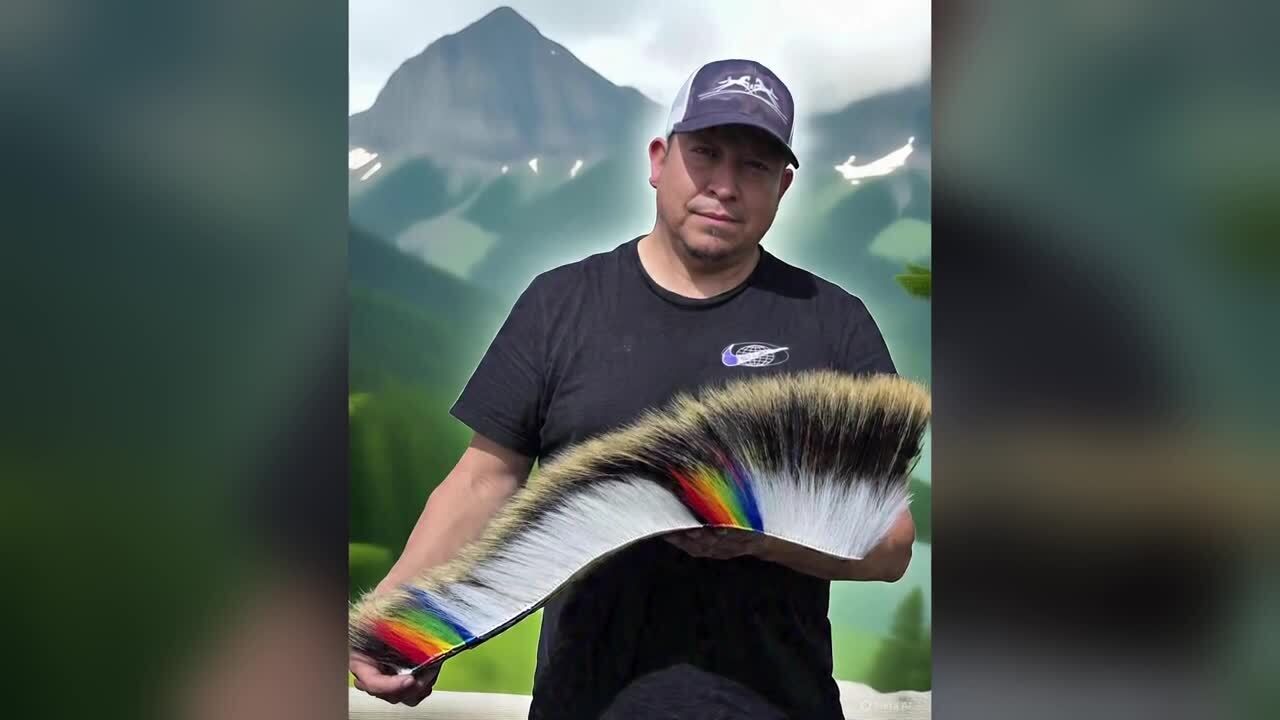
The work itself also demands patience.
"If you have everything laid out within a couple of days, you can get one done. But that's just constantly sitting there and doing it," Madera said.
Brian Vallie always wanted to learn how to make a roach. When he heard about the workshop, he applied and drove from Los Angeles to Billings to take part.
"I don't know many people that make them so it's...Now there's going to be a bunch of us. So I mean that's going to be cool," Vallie said.
For Vallie, the experience is about more than learning a new skill.
"I have a 16-year-old who dances, so I want to be able to make them for him. But then also pass it on to him so he knows how to make them moving forward and everything," Vallie said.
Every detail of the roach he is making is personal.
"My son's beadwork is red and blue...So that way when he's wearing it, it'll match his beadwork," Vallie said.
For many at the workshop, that personal connection is what the program is really about — keeping the tradition alive.
"It's something that we need to pass it on to the younger to, to know how to do it, because in the future, you know, if nobody knows how to do them, then we won't have it anymore," Madera said.
