

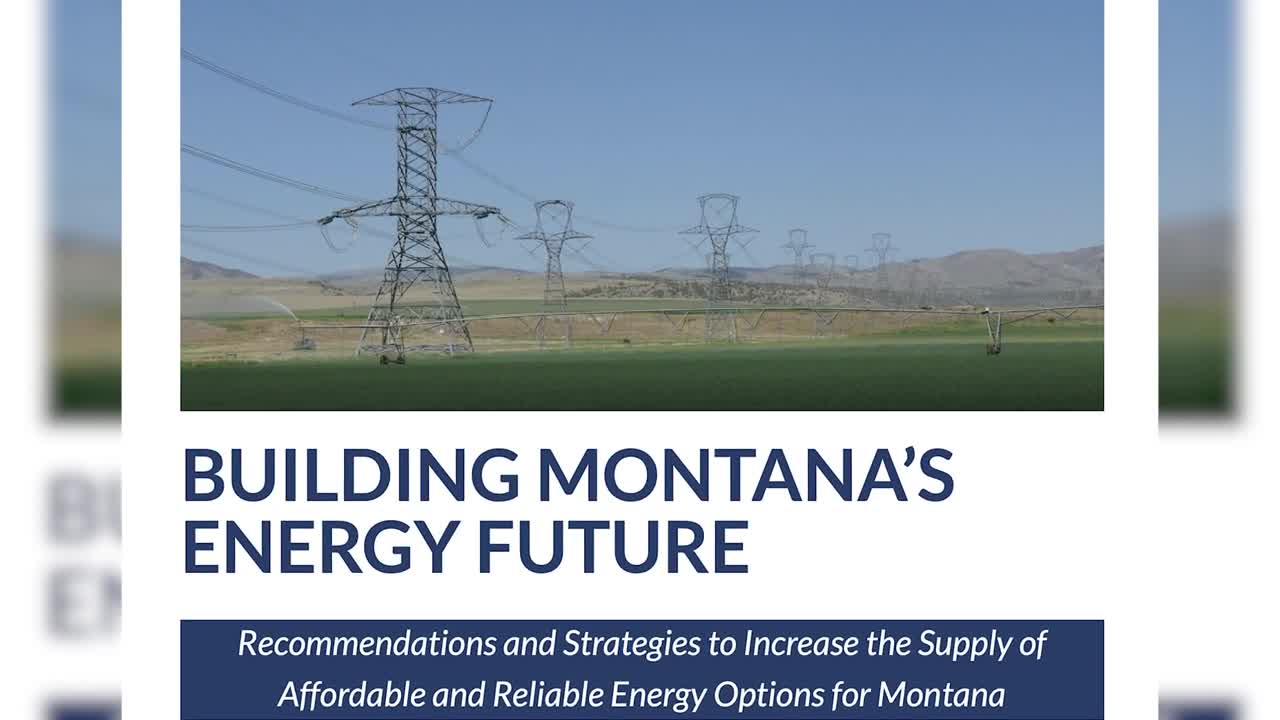



HELENA — Members of a state task force on energy say Montana is at an “energy crossroads,” and they’ve unveiled a list of recommendations for how state leaders can start preparing.
(Watch the video for more on what the task force is recommending.)
Gov. Greg Gianforte created the “Unleashing American-Made Energy Task Force” last year. On Tuesday morning, the group presented its full report to the governor.
“This was a big lift, and important for Montana’s energy future,” Gianforte told the task force members.
The task force’s recommendations include revising regulations and taxes to encourage more investment in energy production and transmission infrastructure. They call for “all-of-the-above” energy development that includes fossil fuels, wind and solar, and other resources. In particular, they call for removing what the report describes as “roadblocks” to development of geothermal and nuclear energy.
“We're not in a position to take things off the table. We need to be looking at all of our options for energy development,” said Montana Department of Environmental Quality Director Sonja Nowakowski, who chaired the task force.
Some of the biggest questions the task force faced were about how utilities serve large customers, particularly data centers. There’s been growing controversy over the potential impacts of data centers when they’ve been proposed in communities like Butte and Broadview.
The task force called on the Gianforte administration to intervene in the Montana Public Service Commission’s proceedings on NorthWestern Energy’s proposal for handling large customers. The report said the goal should be “providing large load customers with a clear, workable pathway to service,” while “ensuring that existing NWE customers—residential, commercial, and industrial—are not subjected to negative rate impacts, cost shifts, or stranded-cost exposure.”
Nowakowski said the task force worked hard to balance different interests.
“We can have data centers and we can have industry, and we can still protect ratepayers and the rates we pay,” she said. “They're not mutually exclusive, and I think the recommendations reflect that.”
The first recommendation listed in the report is reforming the PSC – including potentially changing it from an elected body to an appointed one.
“I think that we heard feedback loud and clear from folks that regulatory stability matters – and regulatory stability matters not only from the utility perspective, it matters from the consumer perspective, it matters from the developer perspective,” Nowakowski said.
Some of the recommendations are things the executive branch can do on its own – for example, DEQ already intervened in the NorthWestern proceedings. However, many suggestions, like any PSC restructuring, will be subjects the Montana Legislature will have to debate during their session next year.
“This report is not the end – in fact, it's just the beginning; it’s the beginning of the next phase,” Gianforte said.
Tuesday’s presentation comes as one seat on the PSC remains empty for now. Gianforte suspended Commissioner Brad Molnar from office last month, after an investigation into his workplace conduct. The governor is currently considering candidates to temporarily fill Molnar’s position. However, a state district judge has yet to rule on Molnar’s lawsuit challenging his suspension.
