

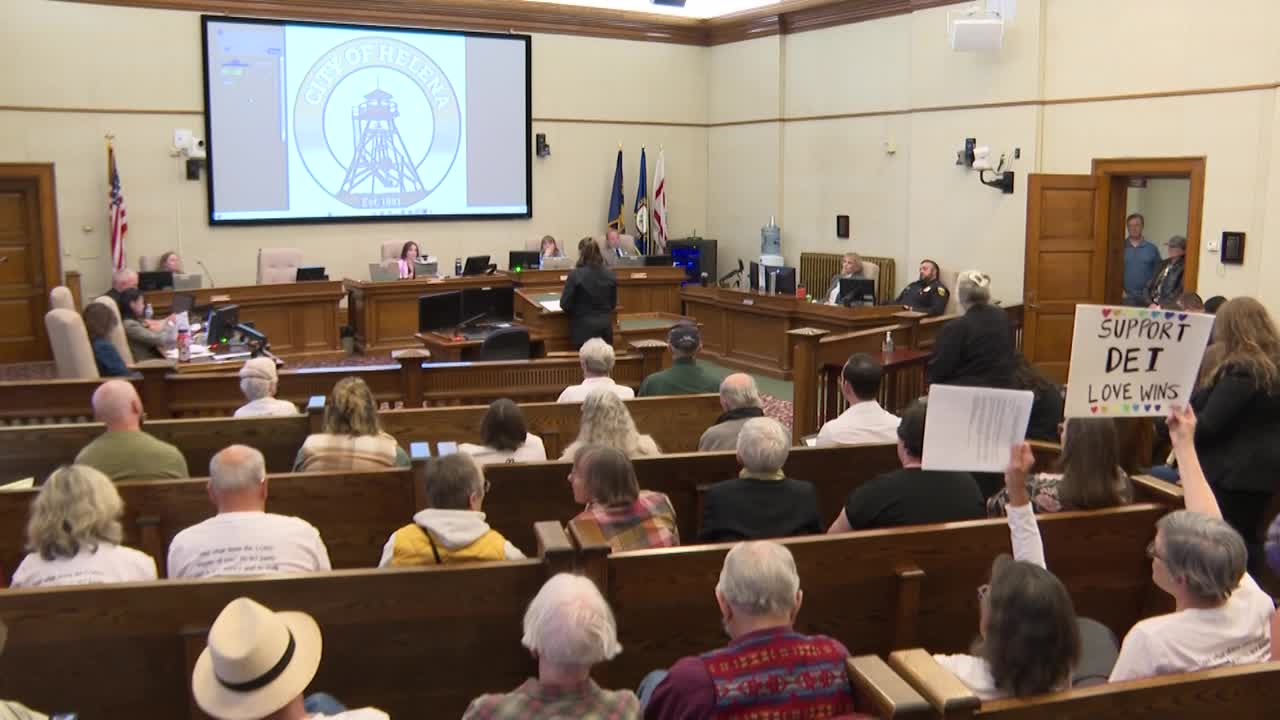



HELENA — The Helena City Commission voted 3-2 Monday night to delay action for now on a federal grant that would fund security upgrades at local government buildings. It came after they heard around 90 minutes of public testimony, the vast majority of it from people warning that accepting the money could obligate the city to get more involved in federal immigration enforcement.
The commission tabled the roughly $53,000 grant, meaning they haven’t accepted it yet but it could come back for consideration at a later time.
(Watch the video to hear more discussion from Monday's lengthy hearing.)
The funding would come from the U.S. Department of Homeland Security, directed through Montana Disaster and Emergency Services. It would pay for new security cameras at the main entrances of Helena’s City-County Building, replacing existing cameras in police facilities at the Law and Justice Center and adding cameras in Helena Municipal Court.
City leaders said they’ve been seeking the money for more than a year because of long-identified safety needs. Helena Municipal Judge Anne Peterson, while not speaking for or against the grant, described to commissioners her concerns about security in her courtroom.
“Any time I call a jury, I have at least 50 members of the public in that building,” she said. “If there were a critical incident, these cameras would assist with law enforcement and staff in securing the safety of the public.”
In response to questions about data privacy from the cameras, city Community Facilities Manager Bridget Johnston said they would store recordings on the premises – not in the cloud – for about a month.
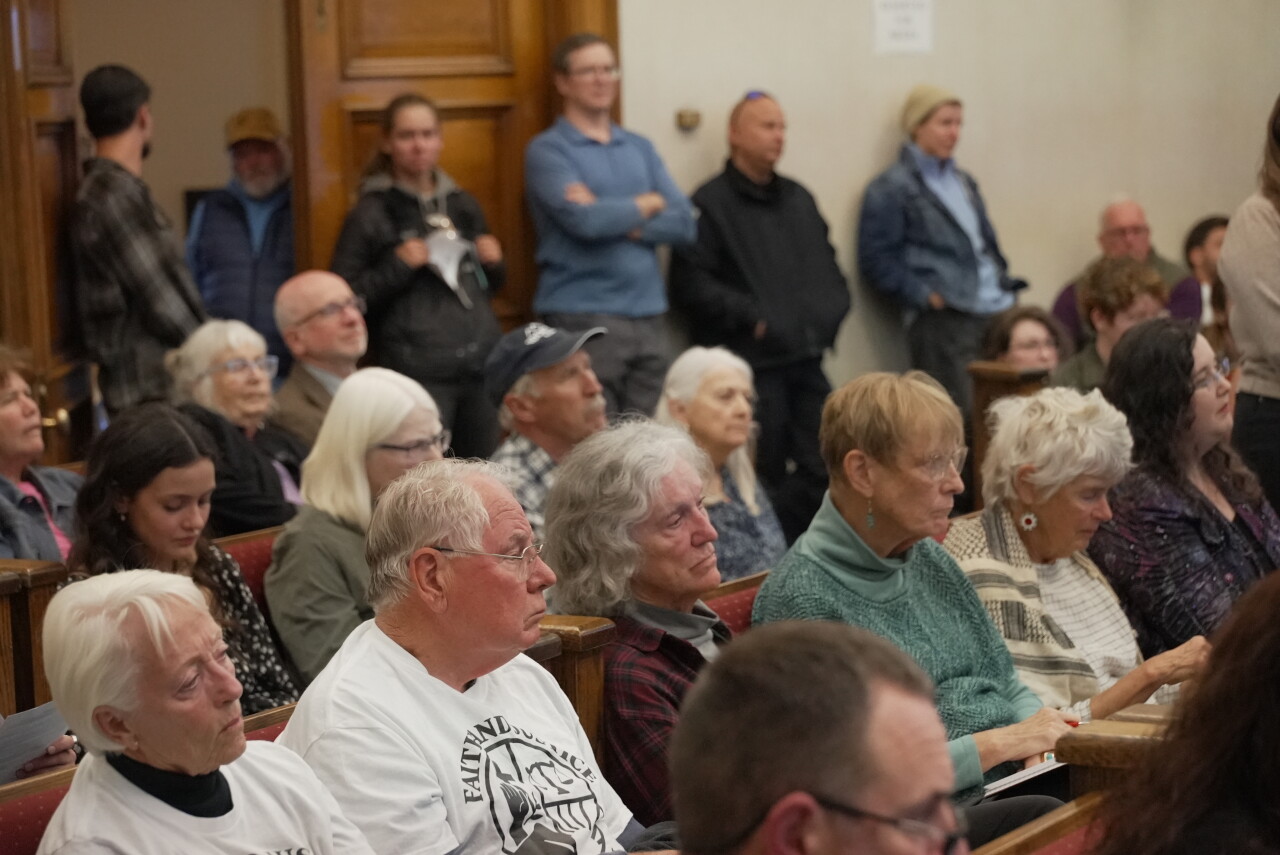
Most members of the public who spoke Monday night said they understood the need for security improvements, but that they were more focused on a list of federal terms and conditions in the contract the city must sign to receive the money. That 15-page document includes provisions saying local governments that accept the money must agree to comply with federal laws and policies on a number of subjects – most notably, immigration enforcement and opposition to “diversity, equity and inclusion” programs.
Opponents of the grant said those provisions would essentially require the city to commit to assisting U.S. Immigration and Customs Enforcement to receive the money.
The Trump administration has, on a number of occasions, sought to put conditions on grants to local governments, as a way to incentivize them to get in line with their policy priorities. Many of those efforts have been challenged in court.
Helena City Attorney Rebecca Dockter said Monday she doubted accepting the money would mean any significant change in how the city is already required to cooperate with federal authorities. She said some of the most controversial provisions wouldn’t be in effect because of previous legal action. However, she acknowledged the language in the document was often confusing.
“It’s not untrue that there is ambiguity – and, to Commissioner [Melinda] Reed’s point, this is not well-written,” said Dockter.
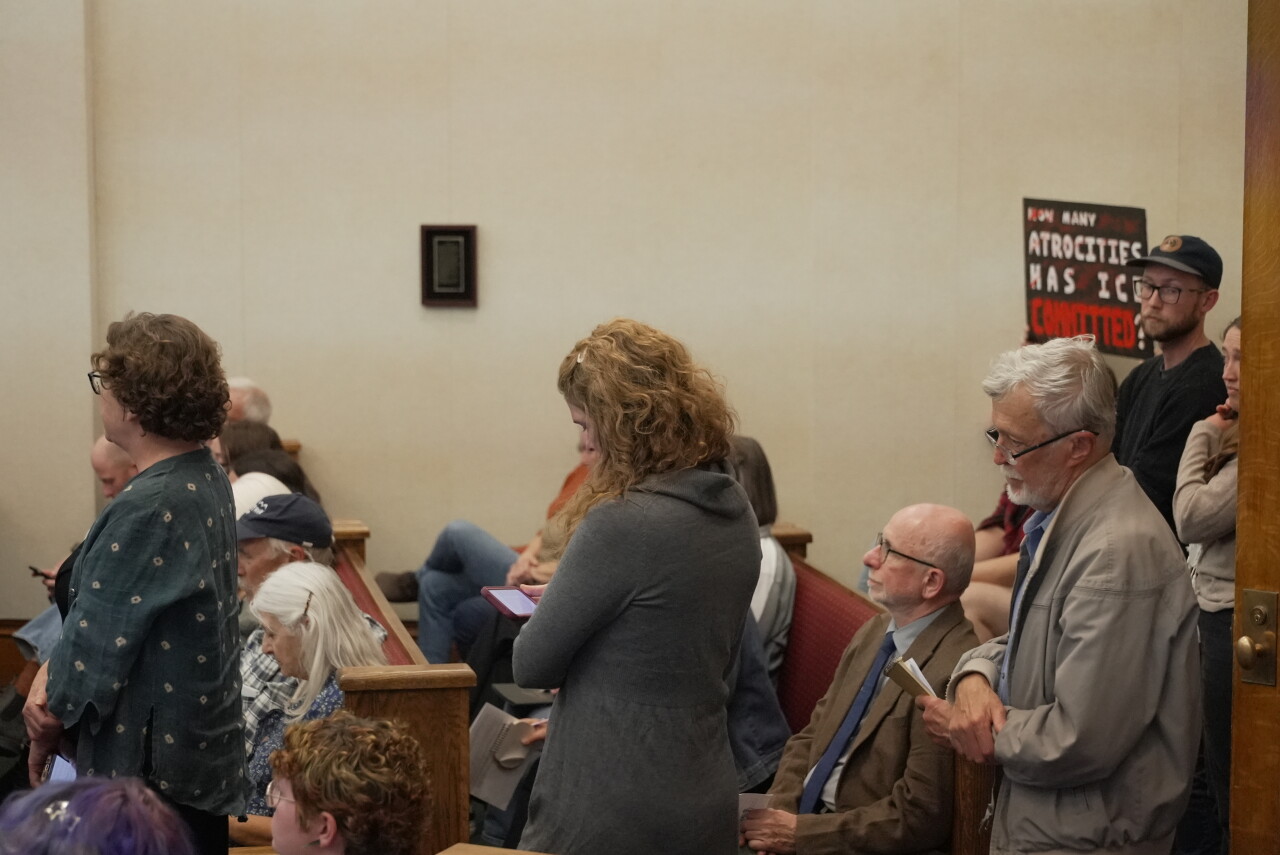
Many of those in attendance said they weren’t convinced.
“We’ve spent well over an hour trying to figure out what it is that we could be agreeing to,” said Robert Filipovich. “That’s about the clearest indicator we need as to what we should do.”
“I would say, is the $53,000 worth the risk?” said Kristy Fortman. “I do not think so – nobody here thinks so. We can find another way.”
A number of the public commenters said they would be willing to donate money toward the $53,000 sum if it meant the city could avoid accepting the grant.
Commissioners Melinda Reed and Julia Gustafson said Monday night they were ready to reject the grant entirely.
“I don't think this is that difficult of a decision,” Reed said. “We were elected to represent people, our community has spoken clearly, we don't know what we are committing ourselves to, and I, in good conscience, cannot vote yes on that.”
Mayor Emily Dean and Commissioners Sean Logan and Ben Rigby voted to table the grant. Dean said she wanted to wait to see if they could find ways to address the concerns.
“If we can receive this grant, as we did in 2020 and 2024, that means that we can get some of these projects done without further impacting the general fund,” she said.
She said Missoula County recently accepted a similar grant, and she wanted to consult with them about how they viewed the provisions at issue here.
This is just the latest in a series of debates on immigration enforcement that the Helena City Commission has gone through since last summer. Earlier this year, the commission adopted a resolution clarifying policies for when the Helena Police Department would cooperate with federal immigration authorities – then rescinded it, after Montana Attorney General Austin Knudsen threatened legal action under a state ban on “sanctuary cities.”
One commenter Monday night said he considered the provisions in the grant contract a “cudgel” that would be used to keep Helena from considering a similar immigration resolution.
