

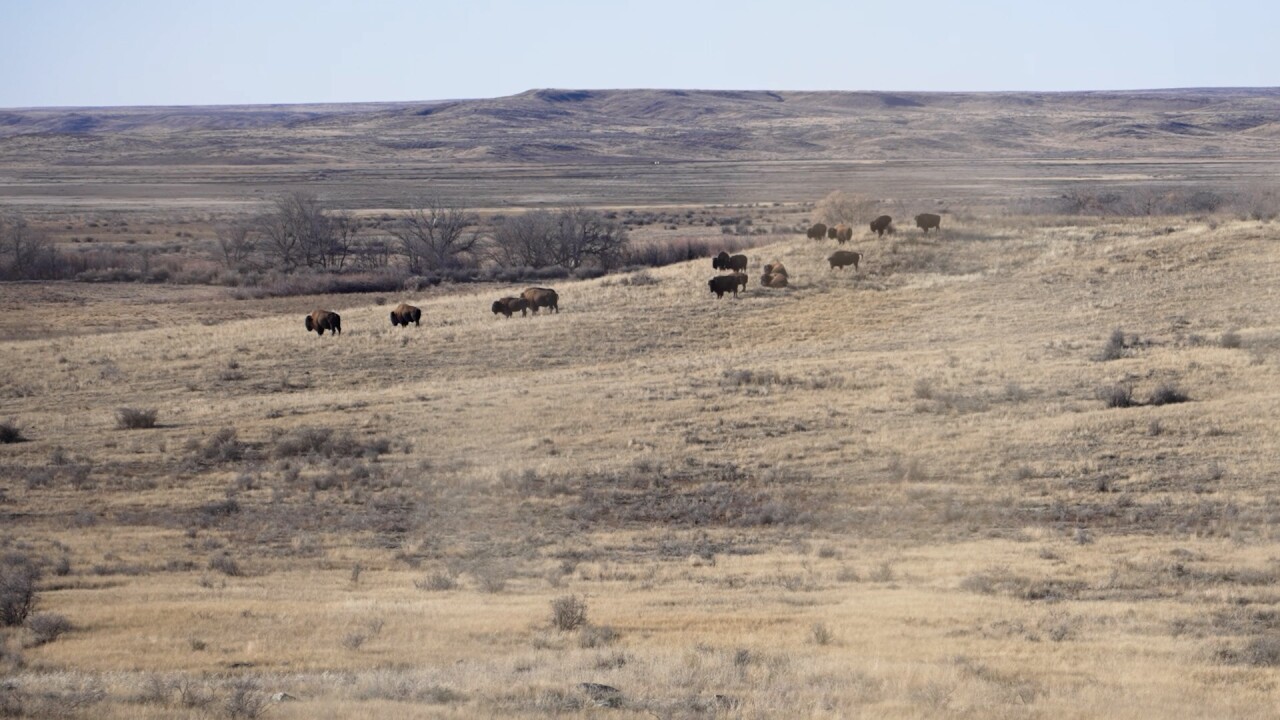


GREAT FALLS — A federal judge has partially granted conservation group American Prairie’s request for a preliminary injunction in its ongoing dispute with the Bureau of Land Management over bison grazing in Phillips County.
WATCH Madison Collier's report below:
U.S. District Judge Brian Morris issued the 29-page order Friday allowing American Prairie’s bison to remain on the three BLM allotments where they currently graze: Telegraph Creek, Box Elder and Whiterock.
Morris declined to extend the injunction to the Flat Creek, French Coulee and Garey Coulee allotments, where American Prairie is not currently grazing bison.
“We’re really grateful that the court has issued us the preliminary injunction and allowed our bison to remain in place while this case moves forward,” said Beth Saboe, American Prairie’s director of public affairs.
The dispute stems from a BLM decision terminating six permits that authorized American Prairie to graze bison on federal land earlier this year. The permits were reissued for cattle grazing only.
BLM gave American Prairie until Sept. 30 to remove its more than 900 bison from the federal allotments. American Prairie said complying with that decision could force the organization to transfer or cull approximately 300 bison.

American Prairie challenged the decision in federal court and requested a preliminary injunction while the lawsuit proceeds.
To receive an injunction, American Prairie had to demonstrate that it was likely to succeed on the merits of its case, faced irreparable harm without immediate relief and that the balance of equities and public interest favored an injunction. Morris found American Prairie met those requirements.
The underlying legal dispute centers on the Taylor Grazing Act and BLM’s interpretation of what qualifies as livestock.
In its 2026 decision, BLM determined that grazing permits should be limited to domestic animals used for “production-oriented purposes.” BLM argued that a production-oriented purpose is an inherent and defining attribute of livestock.
Perri Jacobs, who ranches with her husband about 50 miles south of Malta, has also been closely following the case. Jacobs said American Prairie is a contiguous neighbor and that the two operations share one BLM allotment.
“I’m not surprised that they were able to get an injunction and are going to be allowed to keep their bison on the landscape for a while until this is finally decided,” Jacobs said. “I’m disappointed, but I’m not surprised.”
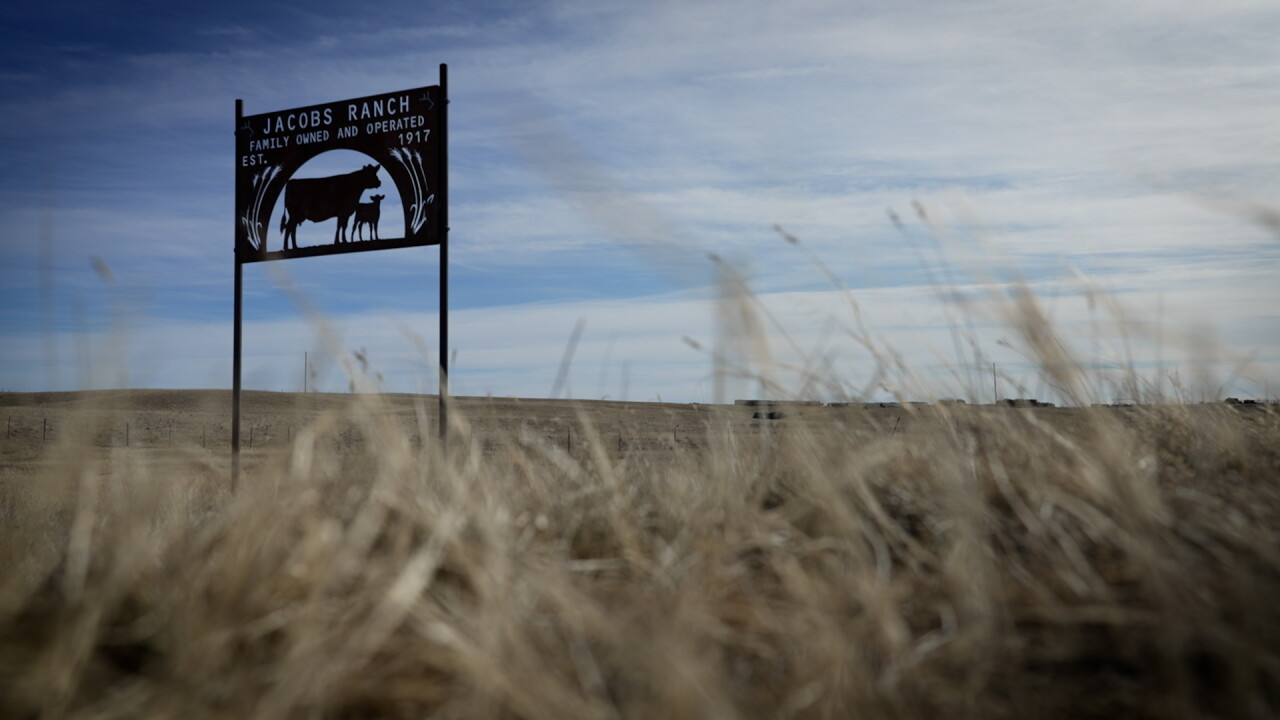
Jacobs said she believes American Prairie’s herd is focused primarily on conservation rather than traditional livestock production.
“They’re there for conservation purposes, and conservation is great,” Jacobs said. “Livestock ranchers do that all the time. We do that every day. If we weren’t conserving the grass and the landscapes that we are on, we still wouldn’t be here either. But we also are in business to raise meat for the people to eat.”
The order found that American Prairie’s domestic bison qualify as livestock under the Taylor Grazing Act. Morris wrote that no statutory language or judicial precedent requires a livestock operation to focus exclusively on production while ignoring conservation, range improvement or preservation.
“This is a win,” Saboe said. “The court’s ruling recognizes what American Prairie has been arguing from the beginning, that the Taylor Grazing Act does not require a grazing operation to focus exclusively on production and ignore conservation or restoration.”
The preliminary injunction preserves bison grazing on the three allotments American Prairie currently uses. It does not resolve the underlying lawsuit or determine whether BLM’s cancellation of all six permits will ultimately stand.
