

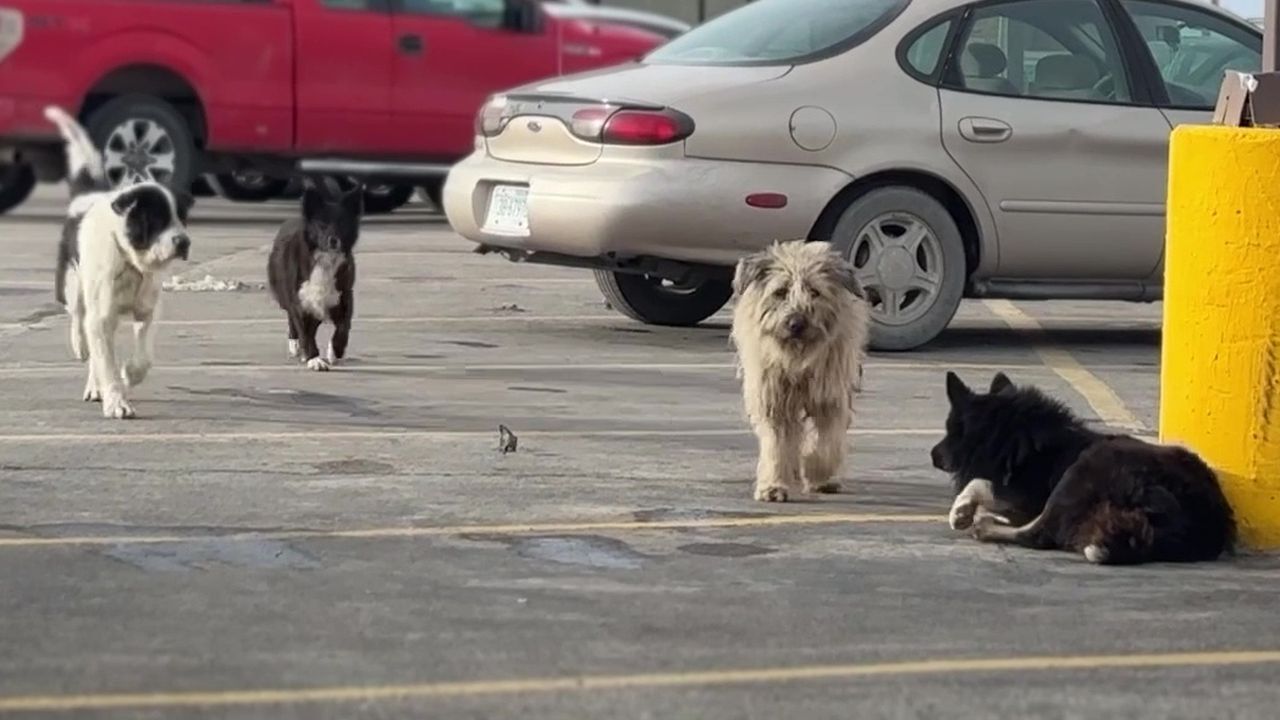


BROWNING — A recent stray dog roundup on the Blackfeet Reservation is drawing emotional reaction from some residents who say dangerous animals need to be addressed, but question how the operation was carried out.
Tom Wylie reports - watch the video and hear from concerned residents:
The Blackfeet Fish & Wildlife Department announced last week that there would be increased patrols and stray dog pickups this week, citing an increase in dog attacks, including a recent incident involving a juvenile walking to school.
The Blackfeet Reservation has been experiencing an increase in dog attacks. Most recently a Juvenile male on his way to school. This has raised concerns of the safety of our youth and residents. So Animal control will be increasing its efforts next week to round up stray dogs. Our priority is the safety of our residents. If you own a dog, please make sure he is properly secured and taken care of. Allowing dogs to roam at large is a violation of public ordinance. Together as a community we can ensure our streets are safe for our youth and community members.
Many residents in Browning agree the community has a longstanding stray dog problem, particularly after several recent attacks, including one MTN News reported on in December involving a woman who said she was mauled by a pack of dogs.
Still, some say the latest response has caused heartbreak and confusion.
“There does need to be a dog ordinance around here, it’s crucial. But not killing them … not killing every single dog that they take,” said Jacy Calflooking, a Browning resident who says officers came to her home during the roundup and attempted to take a dog she says is well known in the neighborhood.
Calflooking said residents are not objecting to the removal of dangerous strays, but rather to what they describe as a lack of communication and due process.
“Everybody knows, yes, take stray dogs,” she said. “But also give those stray dogs a chance to find a home.”
Robert Hall, an anthropologist and director of Native American studies at Browning Public Schools, said dogs have long held an important place in Blackfeet life and history.
“The view of the dog has always been that they’re our companions,” Hall said. “They’ve been with us for thousands of years.”
Hall said that long relationship helps explain both why dogs remain so prevalent across the reservation and why the roundup has generated such a strong emotional response.
At the same time, he said nearly everyone agrees aggressive dogs must be addressed, but many residents are questioning whether the current tactics solve the underlying issue.
“If we do this quick little sweep and just kind of indiscriminately take dogs that are loved and owned, along with dogs that are neglected and aggressive, we’re not solving anything,” Hall said. “What we need is a comprehensive community discussion and narrative.”
Belinda Bullshoe, another Browning resident, said many families only learned of the roundup through social media, raising concerns that elders and others without Facebook may not have had enough notice.
“We’re not defending the attacks,” Bullshoe said. “We’re defending what happened. Family dogs were taken for no reason.”
Bullshoe said she believes the roundup should have come with more notice and clearer guidelines for residents.
“This was very poor planning,” she said. “There should have been letters going to every community member for two weeks, more notice and some guidelines before they came out.”
MTN News has tried numerous time this week to talk with Blackfeet Fish & Wildlife, and Blackfeet Nation public relations officials. We wanted to get clarification about how dogs were selected, whether family pets may have been mistakenly taken, and what happens to unclaimed animals.
As of Thursday afternoon, no one has responded, other than the department’s Facebook notices.
Meanwhile, rescue groups including 406 K9 Rescue (website) have begun helping coordinate foster placements and adoptions for some of the dogs that were recovered, according to residents and social media posts reviewed by MTN News.
As community concern continues to grow, residents say they are still waiting for clearer answers on how the roundup was conducted and whether changes are coming.
“This week’s actions, it’s going to be remembered for a long, long time,” Bullshoe said. “And nobody’s going to get over it.”
