

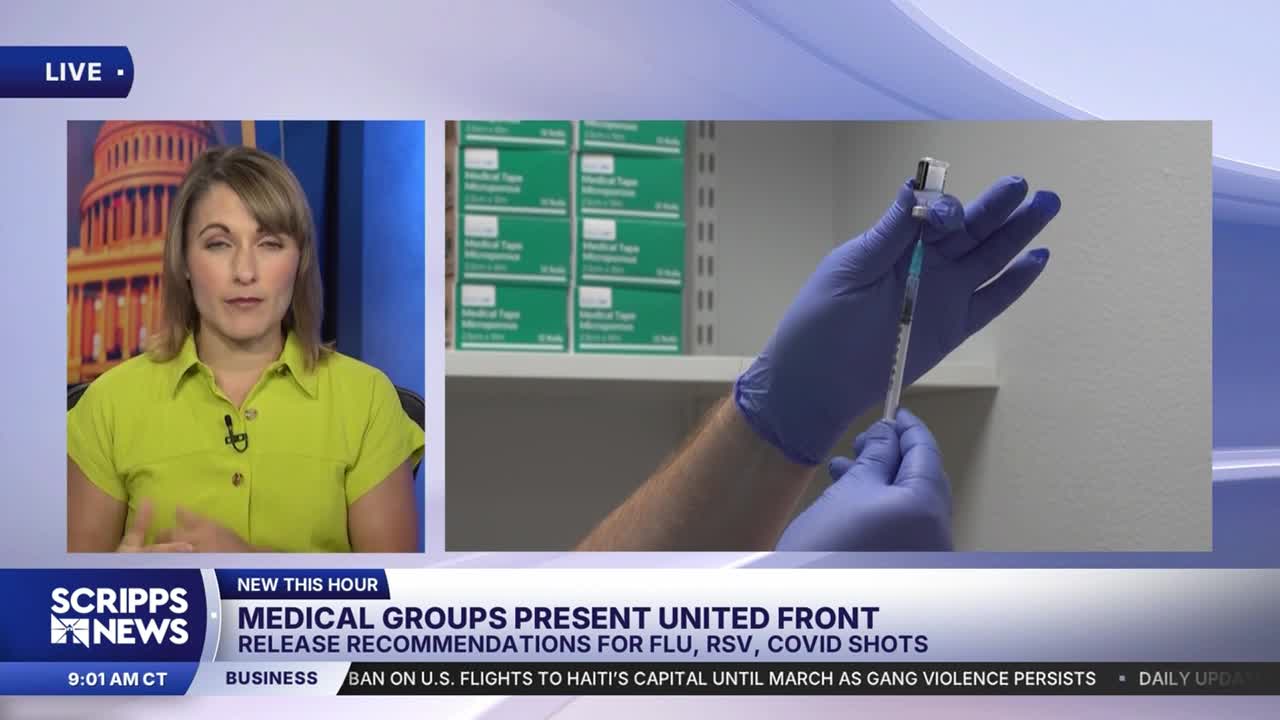


Major medical groups have released their vaccine recommendations for the 2026-2027 respiratory virus season, stepping in as federal health agencies face credibility concerns under the influence of anti-vaccine advocate Robert F. Kennedy Jr.
The American Medical Association and several leading specialty groups — including family physicians, pediatricians, infectious disease specialists, and OBGYNs — are aligned on the flu vaccine: it is recommended for everyone 6 months and older.
On COVID vaccines, some medical groups are going further than the Centers for Disease Control and Prevention. While the CDC recommends parents of children under 18 consult their doctor, several specialty groups say the COVID vaccine should be given to children 6 months to 23 months old. For children ages 2 to 18, those groups recommend vaccination if the child is at high risk of severe COVID infection.
RELATED STORY | COVID-19 cases rising nationwide ahead of updated vaccine rollout
RSV recommendations vary by specialty. OBGYNs are focused on pregnant women, noting the RSV season now runs from September through March — an extension from the previous September-to-January window. Across the board, RSV vaccines are primarily recommended for newborns, pregnant women, and adults 75 and older.
Dr. Amesh Adalja, a senior scholar and adjunct professor at the Johns Hopkins Center for Health Security, said the shift away from federal guidance is significant.
"The single biggest change is that the recommendations are not now coming from the federal government. They're coming from professional societies of various different doctors. And I think that's the best situation we could hope for because the ACIP, the Advisory Committee on Immunization Practices, is basically in shambles, has been basically taken over by RFK Jr. and is not really a valid institution," Adalja said.
Adalja said the underlying evidence has not changed dramatically, but it is now being interpreted by credible medical organizations rather than a politically compromised federal process.
On timing, Adalja recommends getting the flu shot before Halloween. Getting it too early can reduce its effectiveness later in the season, but he said September is better than skipping it entirely.
"If you can hold off and get it mid-October, late October, that's going to give you more durability and protection," Adalja said.
For healthy individuals questioning whether vaccines offer meaningful protection beyond preventing severe disease, Adalja said there is value even for low-risk people.
"Flu vaccine gets you through the season in a much better form than if you didn't get the vaccine, even if you do get infected, because the infection you're going to get is going to be less severe," Adalja said.
He acknowledged a growing public trust problem driven by mixed messaging from the federal government.
RELATED STORY | Updated COVID-19 shots cleared as health groups urge vaccination
"Vaccines have now become a political symbol. They've been sucked up into tribal politics, like many things in our day-to-day life," Adalja said.
For anyone confused about what to do this fall, Adalja's advice is straightforward: talk to your primary care physician.
"Primary care doctors, people trust their primary care doctors. They have the resources. They can help you with your specific questions," Adalja said.
