

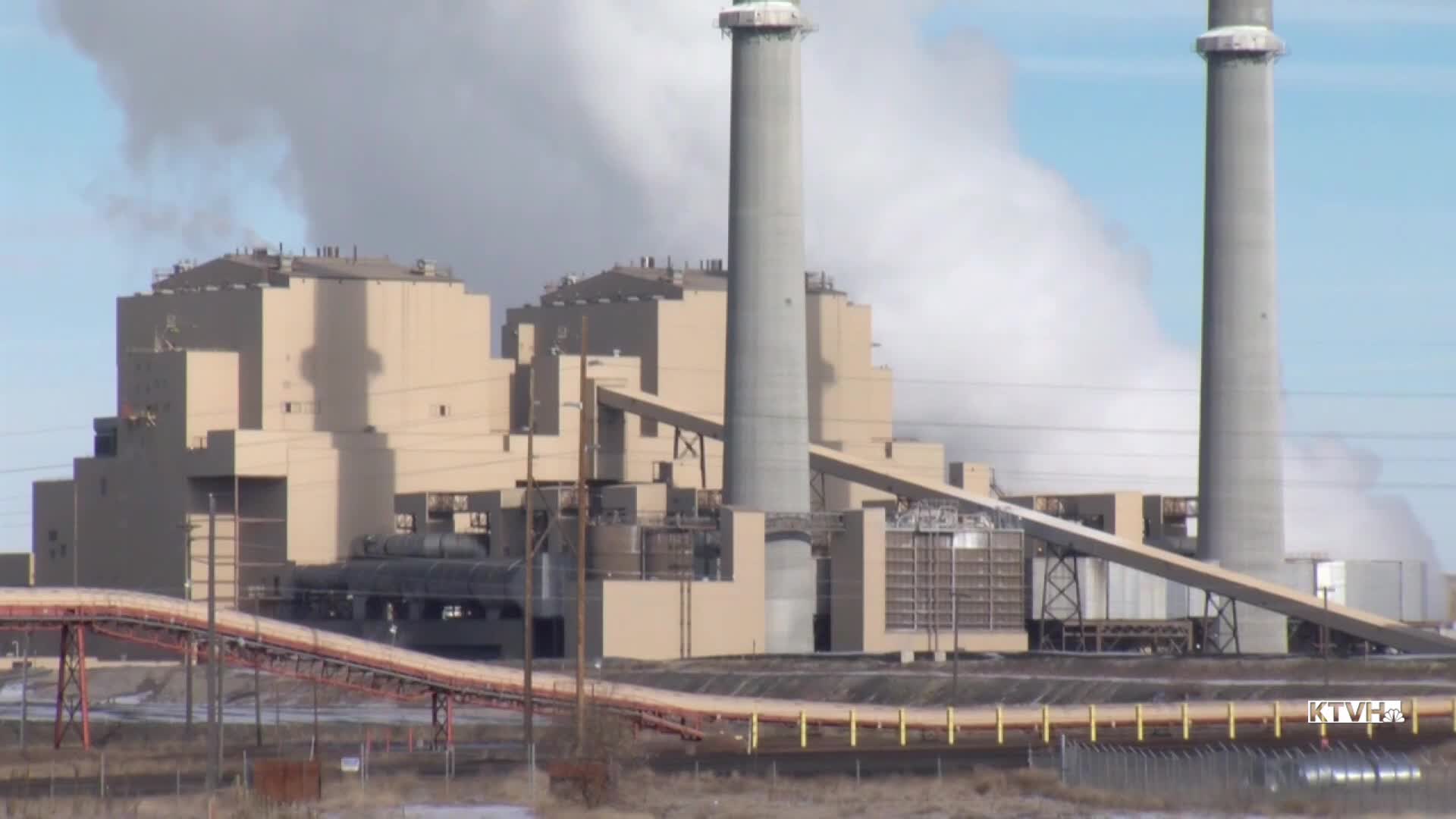



HELENA — At the end of the year, NorthWestern Energy is set to take over majority ownership of the Colstrip power plant. Now, the company is asking regulators to sign off on their plans for the newly acquired power, but some opponents are claiming the deals haven’t gotten the oversight they should.
(Watch the video to see more on NorthWestern's plans for its new larger ownership stake in Colstrip.)
The coal-fired Colstrip Steam Electric Station has a complex ownership structure, with six energy companies holding shares. Currently, NorthWestern controls 222 megawatts of electricity, or 15% of the plant’s generating capacity. Starting Jan. 1, 2026, they will acquire another 222 megawatts currently held by Avista Corp. and 370 megawatts from Puget Sound Energy, bringing the company up to 55% ownership.
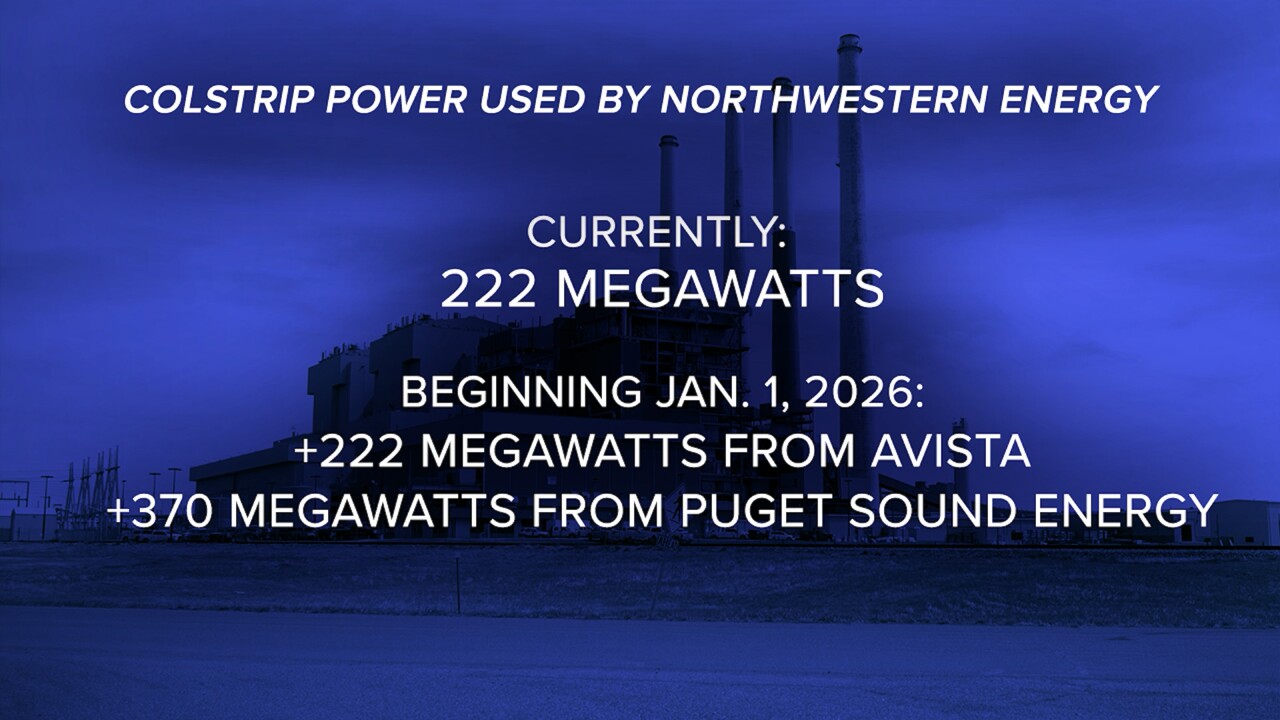
NorthWestern announced it was acquiring Avista’s share of the plant in 2023, then PSE’s in 2024. In each case, the company is paying no direct cost for the ownership stakes. Avista and PSE, both based in Washington state, had to stop providing electricity from coal-fired plants by the end of this year in order to comply with state rules.
While NorthWestern made the two acquisitions on essentially the same terms, they now plan to use the power from each new ownership share differently. The Avista share will be used similarly to the company’s current share, including to serve existing retail customers in Montana. However, NorthWestern leaders say they don’t have the demand within the state yet to make use of the PSE share, so they have announced plans to transfer it to a new subsidiary company and sell the power on the wholesale market.
“It will not be serving the utility customers that take electricity supply from us,” said Mike Green, associate general counsel for NorthWestern. “It very well may serve some of the co-ops, some of the large businesses in Montana that are ‘choice customers.’”
NorthWestern says the new subsidiary, called NorthWestern Colstrip 370Pu LLC, is not part of the “regulated utility” part of its business and therefore does not fall under the jurisdiction of the Montana Public Service Commission. Instead, the company has gone to a federal agency – the Federal Energy Regulatory Commission, which oversees interstate energy transmission and wholesale sales – to ask for approval of its plans. It has proposed an agreement for Mercuria Energy America, an independent energy trading company, to purchase all the power from the PSE share and sell it on to other users.

Green told MTN NorthWestern saw additional generation capacity as the major benefit of acquiring Avista’s stake in Colstrip, but when the chance came to take over PSE’s, they were most concerned about getting to 50% ownership – giving them greater authority to make decisions about operations and maintenance of the plant. He said keeping the PSE share under the subsidiary would protect existing customers from being responsible for the operations costs associated with it – estimated at around $30 million – until Montana demand grows enough that they need to use it within the state.
“We think this is the best of both worlds,” Green said.
But others have argued the move is essentially shielding the acquisitions from proper scrutiny. Last week, the PSC filed with FERC, seeking to intervene in NorthWestern Colstrip’s case. They argued regulators should have had a chance to weigh in on the transfer, saying it was “engineered to avoid Montana regulation.”
Montana Environmental Information Center has also objected in the FERC case. Executive director Anne Hedges told MTN NorthWestern hasn’t demonstrated the need for acquiring both new ownership shares and hasn’t shown enough evidence that current customers won’t be harmed.
“The question is who's going to pay for this enormous amount of power and a percentage of the plant that we don't need, that's going to need fixing,” she said. “So when push comes to shove, who's going to pay to fix it? We're very concerned it's going to be existing customers.”
Hedges accused NorthWestern of trying to push through their proposals at the last second, despite having announced the acquisitions a year and two years ago.
“They are in complete control of all of this, but they are not leaving anybody enough time to get the answers,” she said.

Green said uncertainty in energy markets meant NorthWestern couldn’t be sure they’d raise enough money from the PSE share to offset the operating costs, but holding it in the subsidiary meant those losses wouldn’t come back onto the main body of customers.
He argued the fact that FERC rather than the PSC was overseeing NorthWestern Colstrip didn’t mean it was avoiding regulation.
“We really, from my perspective, haven't skirted anything; we've just kind of moved from one regulatory regime to another,” he said.
However, he acknowledged people could have that concern and said NorthWestern is now trying to talk openly about their plans as a way to address it.
Meanwhile, NorthWestern was in front of the PSC again on Tuesday, this time asking the commission to approve an adjustment related to the Avista share of Colstrip. The company says it has set up three yearlong contracts to sell 58 megawatts of the power from that share on the market, and they have requested a waiver that would allow them to use the revenues for those contracts to offset some of the additional $18 million operating costs connected with it.
Without the waiver, those revenues would flow into the Power Costs and Credits Adjustment Mechanism, or PCCAM – a measurement intended to adjust for the utility’s variable costs and credits. Eventually, that additional revenue could lead to a downward adjustment on customers’ rates. However, Green argued that wasn’t the full story.
“We could see a reduction in rate, but it really is an artificial reduction because it's revenue being generated by a plant that the customers aren't paying for yet, so it doesn't really have the full cost of the generation,” he said.

NorthWestern is arguing that, as it stands now, customers will see all the benefits of selling the newly acquired power, but the company will take all the financial risk if market sales come in lower than expected. The company says this waiver would help even that out, but still would leave any shortfalls to be covered by NorthWestern rather than ratepayers.
MEIC also objected to the waiver request. Hedges said adjusting the PCCAM isn’t the right way for NorthWestern to make this type of request, and that the waiver would essentially be charging for the costs of a generating resource before a determination that it was in the public interest.
“We should not be on the hook for bad investments by Northwestern Energy – that's why we have a utility regulator,” she said. “That's why we have traditional processes that the utility is supposed to go through to make sure their existing customers are protected, and it raises red flags when the utility tries to go around all of those traditional controls.”
The regulators overseeing these proposals will be operating on different schedules. FERC could take action as soon as this week on NorthWestern’s initial request to establish a rate structure for the NorthWestern Colstrip subsidiary. They have more time to act on the proposed agreement with Mercuria.
PSC leaders said they could consider NorthWestern’s PCCAM waiver request during a meeting in January.
