

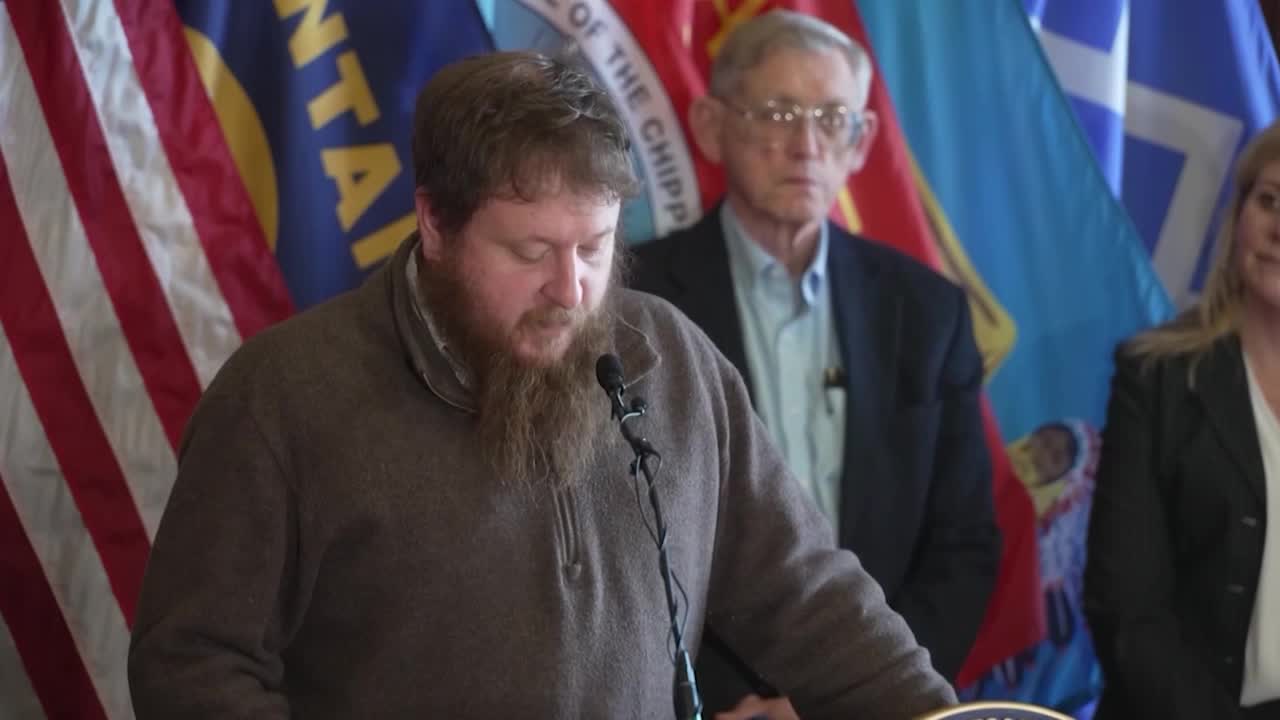



HELENA — Montana House Speaker Rep. Brandon Ler, R-Savage, says it was justifiable to hold onto a bill from last year’s legislative session for months, to give it a better chance of getting its own hearing in court. However, he says he allowed it to move forward last week because it no longer made sense to continue delaying it.
“It was just time to move it along in the process,” Ler told MTN Monday.
(Watch the video for more of Ler's explanation of his decision.)
Senate Bill 437, sponsored by Sen. Carl Glimm, R-Kila, seeks to define a person’s sex as being either male or female and fixed at birth. It was the last bill from the 2025 legislative session that hadn’t either become law or died in the process.
Once a bill passes the Legislature, it must be signed by both the speaker of the House and the president of the Senate before going to the governor. However, there’s no deadline in law or rules that says when they must sign. In this case, Ler simply withheld his signature, leaving SB 437 in limbo – still alive, but not officially law.
After almost a year, Ler finally signed the bill last week, then sent it on to Gov. Greg Gianforte, who signed it into law shortly after.
Ler says his goal was to keep SB 437 from being rolled into an existing court case where a district judge in Missoula struck down a similar law: Senate Bill 458, also sponsored by Glimm, from the 2023 session. However, he says that case has been “dragged out” so long that SB 458 isn’t getting its due process, so there was no reason to keep waiting.
Plaintiffs who challenged SB 458 said the law was discriminatory and harmful to transgender and intersex Montanans. Their attorneys told MTN last week that they saw no substantive difference between the two bills and that they were already making the request to add a challenge to SB 437 to their case.
Ler argues it’s appropriate to hear SB 437 separately, but he doesn’t think that’s likely to happen.
“The court was saying, ‘This is where we find it unconstitutional,’ so we went ahead and changed it,” he said. “And now the groups that are going to sue on it are going to sue again and they'll find something else that's unconstitutional about it.”
Ler defends his procedural move, saying he hadn’t hidden his strategy from House Republicans or Democrats.
“We let the public know from Day 1 what we were doing and why we hadn't signed it,” he said. “I think this is a tool that's in our toolbox that we can use. I wish that this other case would have been heard and finalized, and then this case would have got a fair shot – and now, to us, it just doesn't seem like it's going to get a fair shot.”
Ler is also involved with one other dispute over where a lawsuit challenging a bill should be heard. He has supported a motion to move a second Held v. Montana climate lawsuit from Broadwater County to his home county, Richland County in far eastern Montana.
The Legislature passed Senate Bill 97 last year, which says when a lawsuit challenges the constitutionality of a newly passed law, that law’s main sponsor can seek to have the case moved to the state district court in their home county. Ler sponsored House Bill 285, one of the bills the Held plaintiffs are challenging, which seeks to keep environmental reviews from stopping or delaying projects.
“I think that the judges that we put in in different parts of the state, obviously, are going to view this differently,” he said. “I think that, if you're going to have extreme effect on what happens in eastern Montana – whether that's in the oil fields or coal mining, that Held case trickles down into every industry – I think that if it's going to have a major effect out east, I think that we should have the ability to try to get the case heard out east.”
Plaintiffs have opposed the motion to relocate the case, saying it would unreasonably burden their access to court and that SB 97 isn’t justified by a legitimate government interest.
