

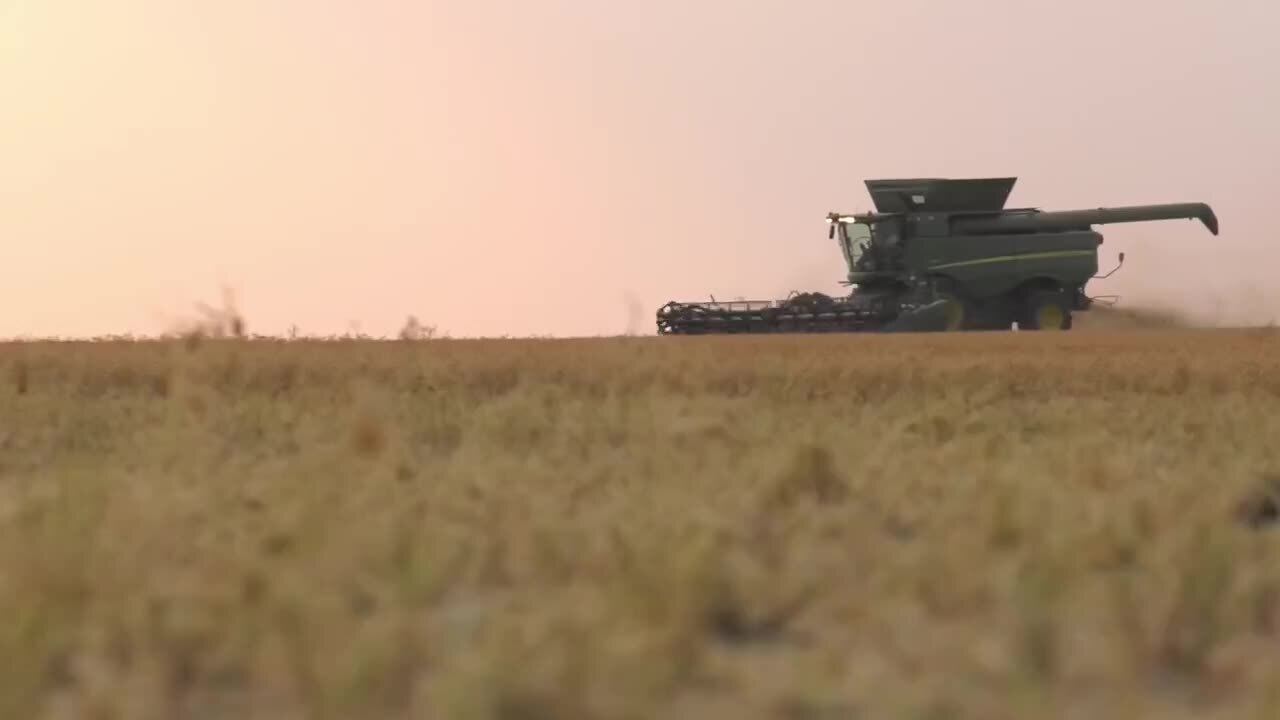

BILLINGS — Family farms around Montana are vanishing as land prices rise and the next generation of farmers steps away from the industry.
It's a trend being felt nationwide. According to the 2022 Census of Agriculture, 40 percent of farmland in America is owned by people 65 and older.
Click here to learn more:
Longtime auctioneer Rick Young has witnessed the trend firsthand as he assists families selling farm equipment after selling land they've owned for generations.
"We find that a lot of ranchers and farmers have a real hard time letting go," Young said.
Young said two factors are driving those decisions, with many farmers and ranchers feeling that selling is unavoidable. The first is a lack of family succession.
"They realize that maybe none of their children are interested in continuing the farm and ranch operation," Young said.
The second is cost, with the prices of land in Montana skyrocketing.
"It's so lucrative that these land owners have no choice but to sell," Young said. "They wouldn't make as much as they will selling with 50 years of work."
Megan Torgerson is the founder of the agriculture-focused Reframing Rural podcast, which she said "highlights ideas for how families can stay in agriculture." She said the price of land is pushing the next generation out before they can get started.
"One of the biggest barriers to entry for next-generation farmers is the high price of farmland," Torgerson said.
With fewer family buyers able to afford the land, Torgerson said more farms and ranches are being sold to large corporations. The numbers back up the trend.
"So the number of farms and ranches in Montana went down more than 10 percent in 2017 and 2022 and that's a statistic from the USDA," Torgerson said.
Near cities like Billings, Torgerson said that land isn't being turned into agricultural operations. Instead, it's being converted to housing and development.
"Someone told me once, and this made me so sad, that the last crop for farmers outside of Billings is housing developments," Torgerson said.
Torgerson said that with nearly half of the farmers and ranchers in the country being aged 65 and older, the future of the industry is in question.
"It's estimated that over the next 20 years, 300 million acres will be changing hands," Torgerson said.
Young said that if those lands are changed into the wrong hands, the effects could be impossible to reverse.
"Once those sell out, they tend to never come back to agriculture production," Young said. "They just don't. So, eventually, you just wonder who's going to feed the people."
