


Farmers across Montana are heading into the spring planting season facing another potential challenge: rising fertilizer prices.
Suppliers and producers alike say global tensions involving Iran are beginning to ripple through fertilizer markets, pushing prices higher at a time when producers are already managing tight margins.
Madison Collier reports - watch the video here:
Erik Somerfeld, vice president of the Montana Farmers’ Union, says the price increases are already being felt locally.
“Just this week, because of the war, fertilizer here locally is going to jump about fifty to fifty-five dollars a ton,” Somerfeld said. “So it’s going to be up over seven hundred dollars for urea.”
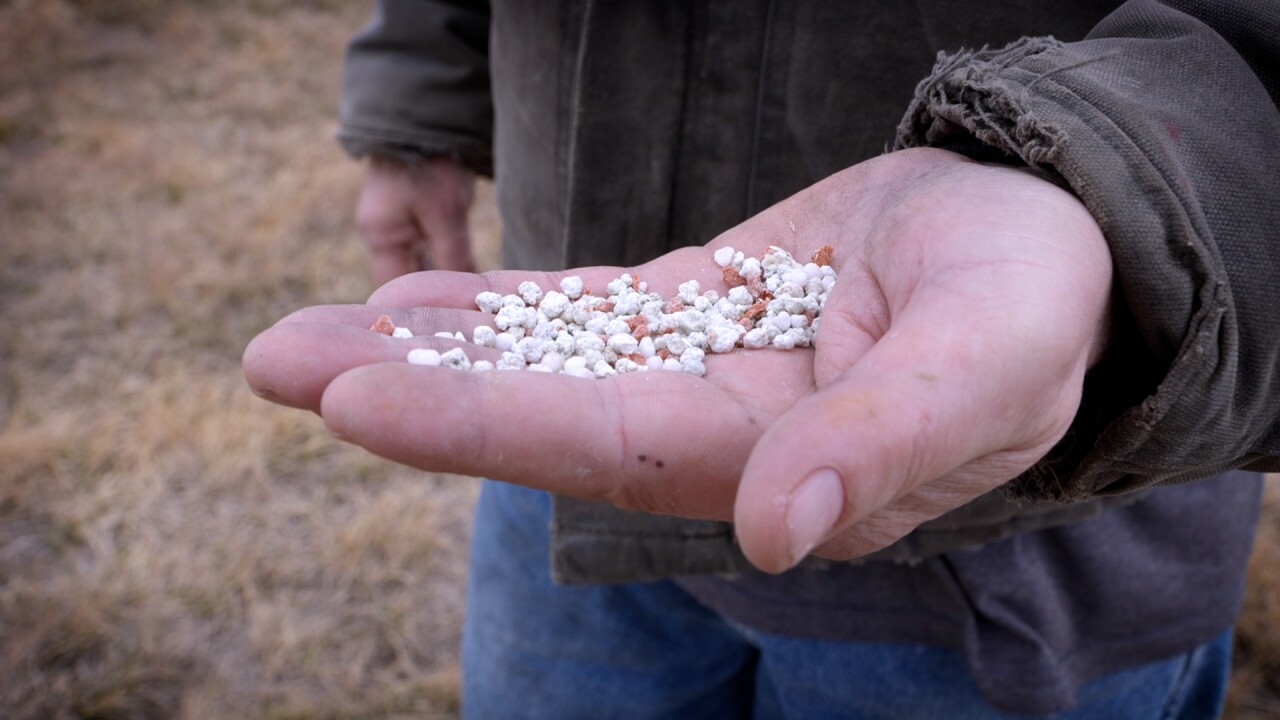
Urea is one of the most commonly used nitrogen fertilizers for crops such as wheat and barley, making it a key input for many farmers across Montana.
Somerfeld says the current price surge is building on pressures that were already developing before the conflict.
“That’s been a problem even before this started because of consolidation in the industry,” he said. “This is just making it worse.”
Part of the concern centers on global shipping routes. A large portion of the world’s fertilizer supply moves through the Strait of Hormuz, a narrow waterway between Iran and Oman that connects the Persian Gulf to international shipping.
According to UN Trade and Development, UNCTAD, roughly one-quarter to one-third of globally traded fertilizer, including key nitrogen products like urea and ammonia, passes through that corridor.
Because several major fertilizer-producing countries in the Middle East export through that route, any disruption to shipping can quickly tighten global supplies and drive prices higher.
