


In a community where new development seems to be around every corner, one nonprofit is working to preserve a piece of Montana’s agricultural and wildlife heritage.
The Gallatin Valley Land Trust (GVLT) has announced the permanent conservation of 190 acres of prime agricultural land near South Cottonwood Creek.
WATCH: The Bos family has permanently protected 190 acres of vital farmland and elk habitat near Bozeman
“It’s scenic, it’s open, it’s agriculture, and it’s wildlife habitat,” said GVLT Executive Director Chet Work.
GVLT, a nonprofit dedicated to conserving private lands in southwest Montana, has been under Work’s leadership for five years. His passion for preservation runs deep.
“My family was very much into wildlife habitat and agriculture and wanted to conserve their ranch,” he said.
Work explained that the newly conserved property is protected under a conservation easement.

“An easement is a contract between a landowner and a land trust, an organization like ours, that limits the amount and type of development that can occur on the property,” he said.
Such agreements not only safeguard open spaces but can also offer benefits to landowners.
“There are often incentives—tax incentives, cash incentives—that can help a family make that commitment to their community as well as to the future of their operation,” Work said.
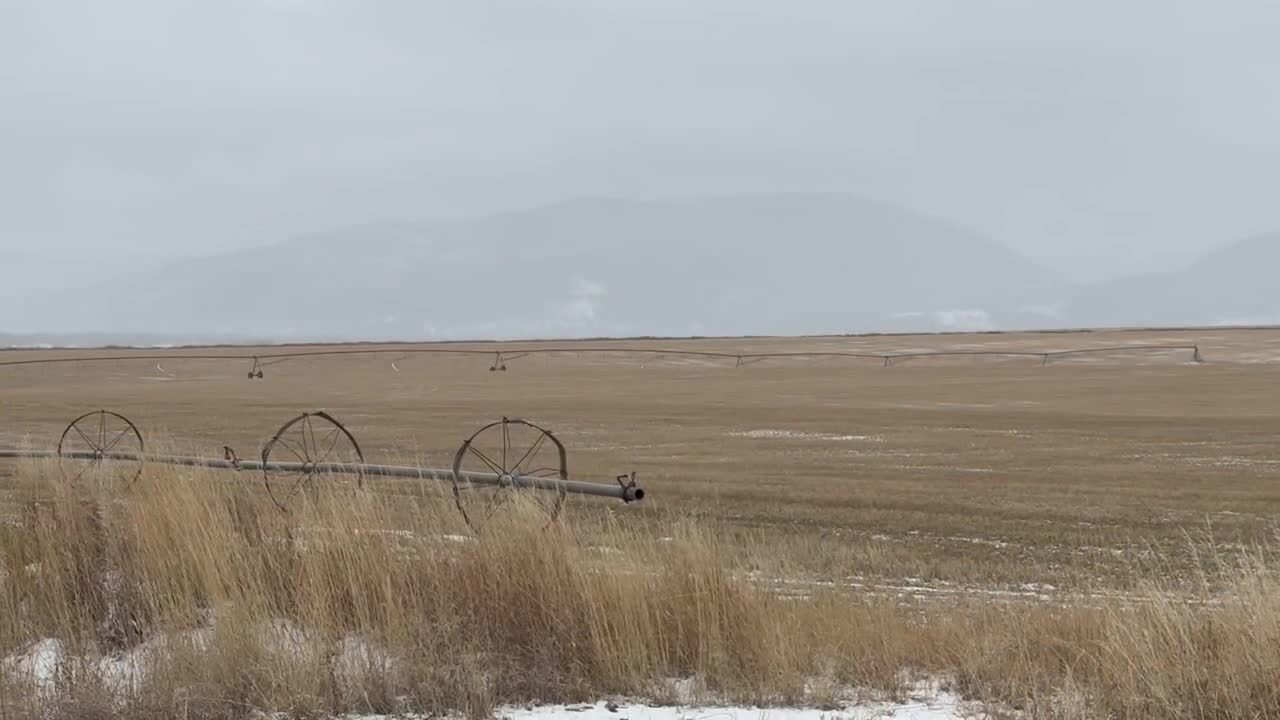
Over the years, GVLT has partnered with about 120 families to conserve 137 properties, protecting more than 75,000 acres in southwest Montana. The group’s interactive online map shows these conserved lands, including a large swath just south of Bozeman.
“We did the first conservation easement with the Bos family in 2009,” Work said.
The Bos family began dairy farming in the area in 1957 and conserved 250 acres of their original farmland in 2009. Seventeen years later, the next generation is carrying on that legacy.

“Not only do we get to work with the same wonderful family, we got to preserve an adjacent property, and that creates a bigger block of conserved land,” Work said.
The newly protected acreage is especially important.
“It happens to be really critical winter range for the Gallatin elk herd,” Work said.

Footage captured last winter near the easement showed the importance of the land for wildlife. But the benefits extend beyond agriculture and habitat.
“What does the community get? Why is this important?” Work asked. “We get open space. We get active agriculture. We get this legacy of agriculture that will never go away.”
